Two units in one page
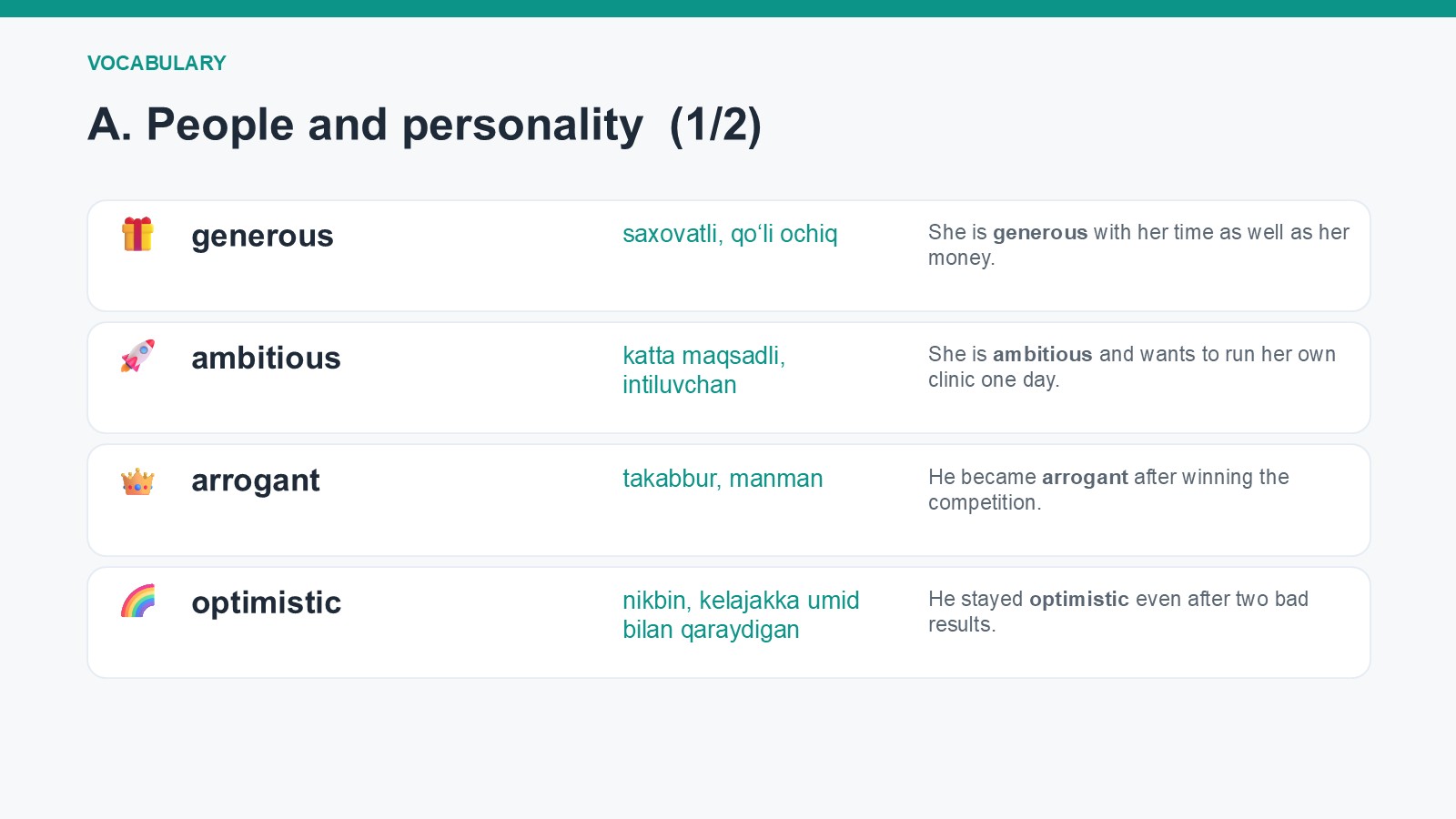
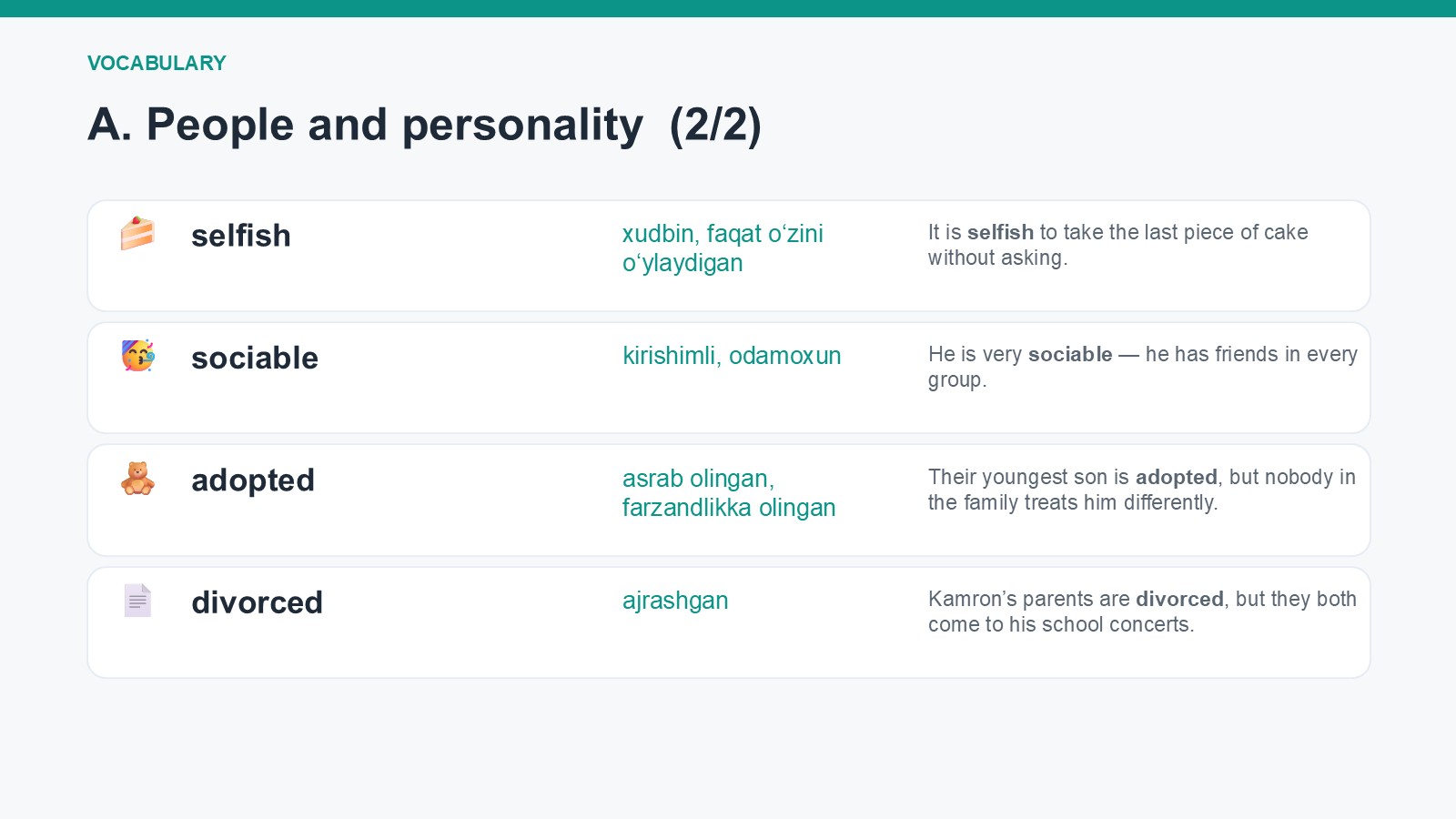
Unit 1 was about people. A generous person gives; a selfish one only thinks of himself. Someone modest never boasts, while an arrogant person thinks he is better than everyone. If you are sociable, you have many friends; if you are sensitive, words can hurt you.
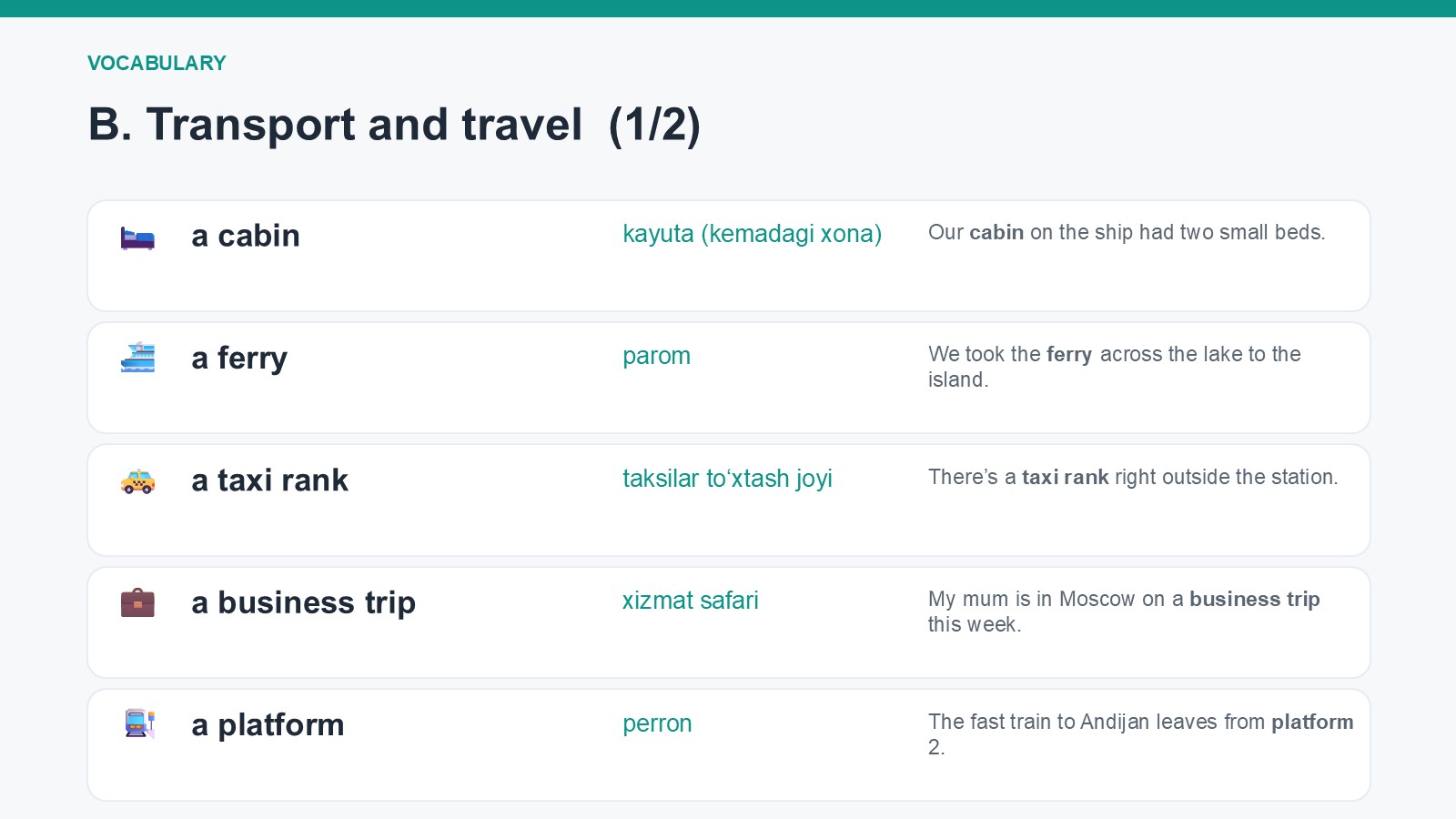
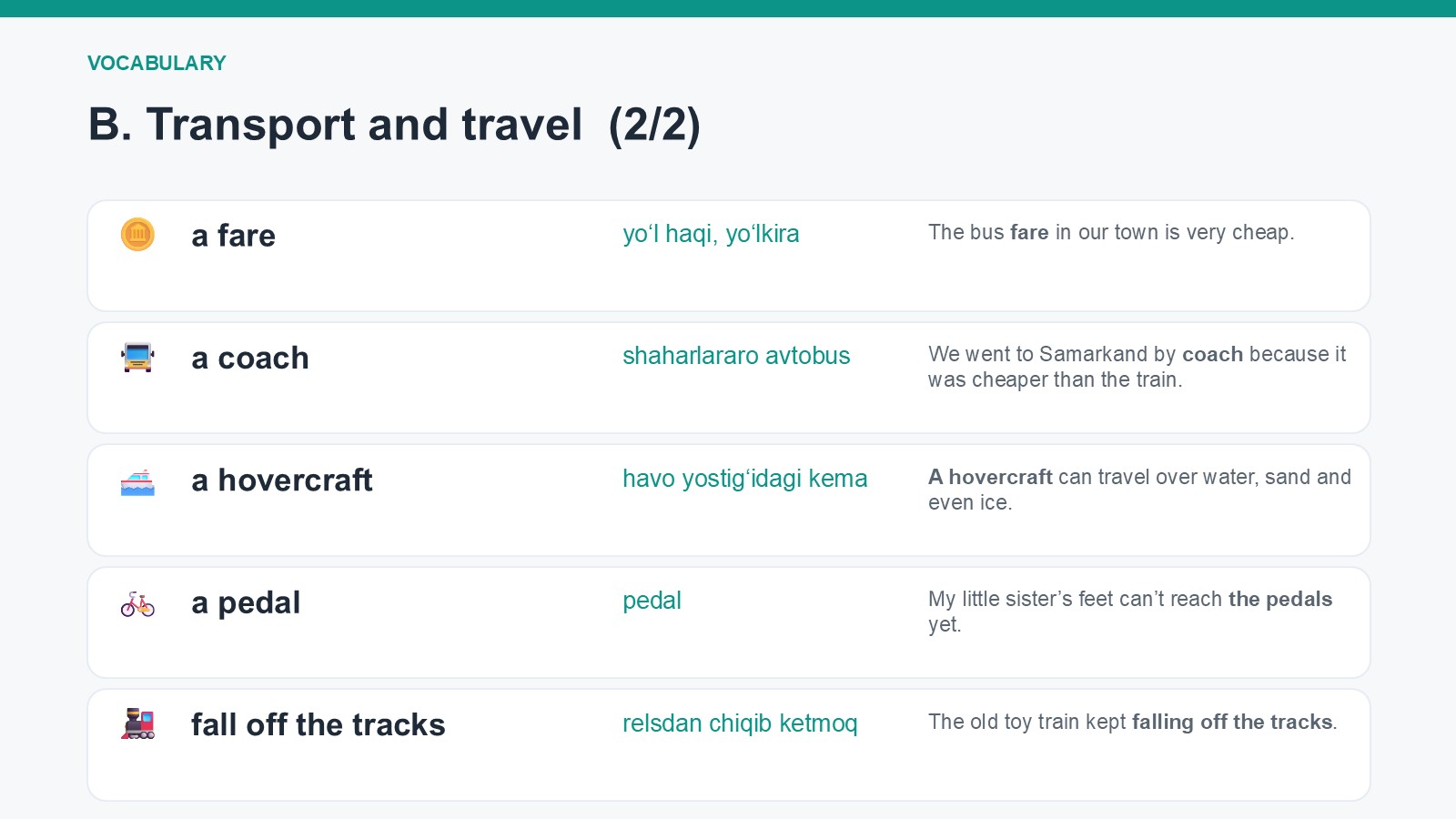
Unit 2 was about transport. You wait on a platform, pay a fare, and hope the train does not fall off the tracks. A coach goes between cities, a ferry crosses the water, and a hovercraft lifts out of it. Taxis wait at a taxi rank.
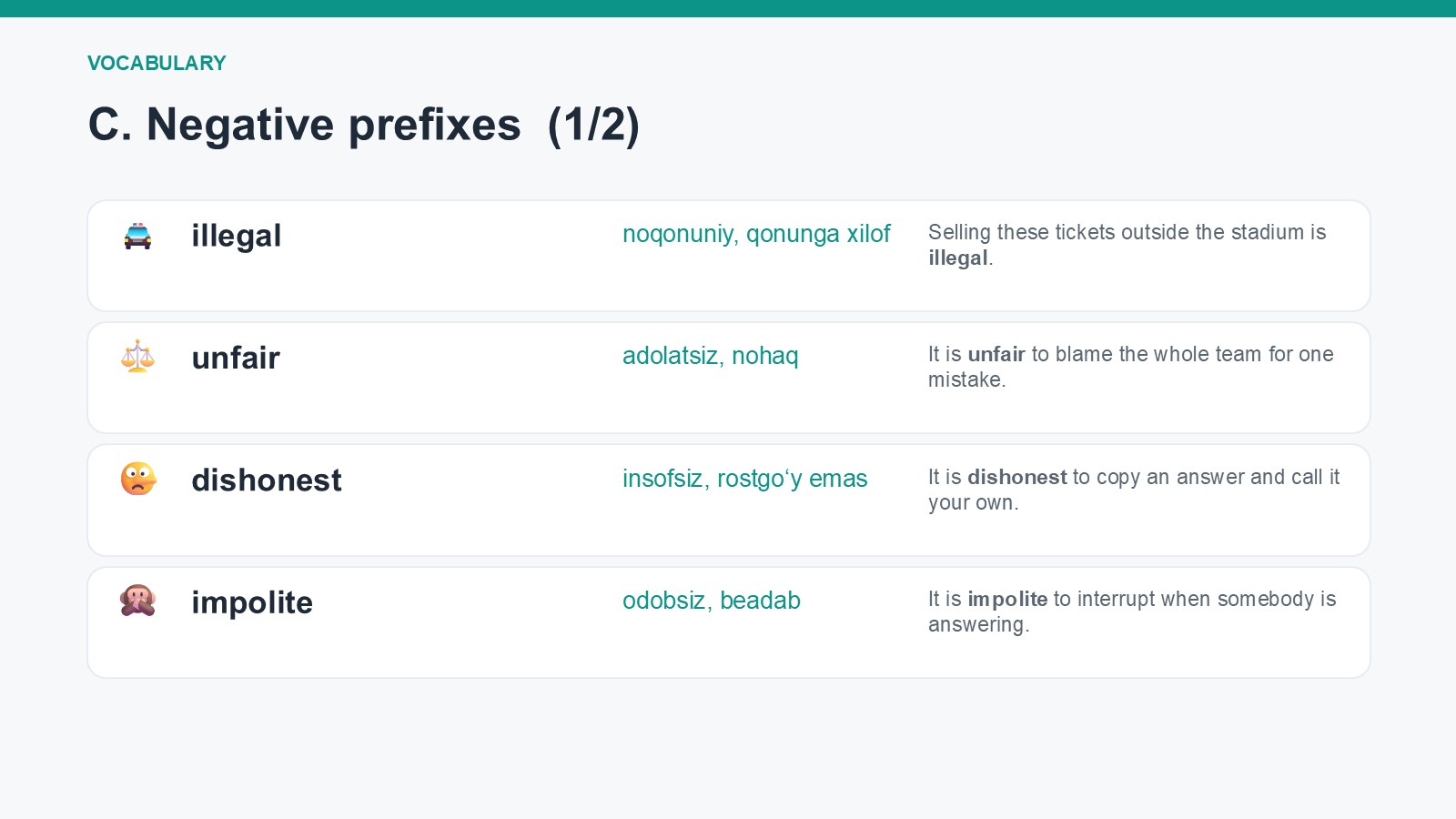
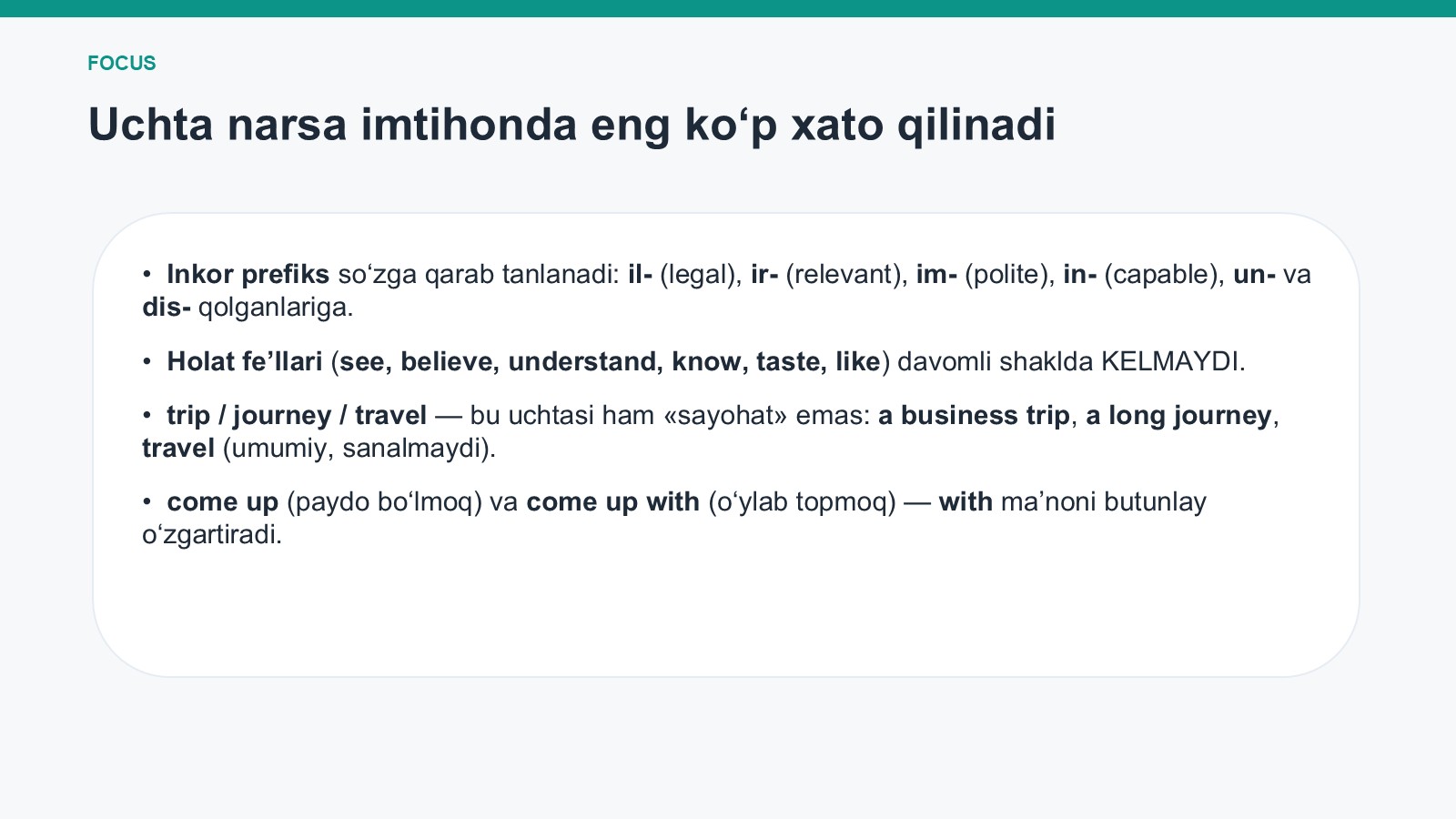
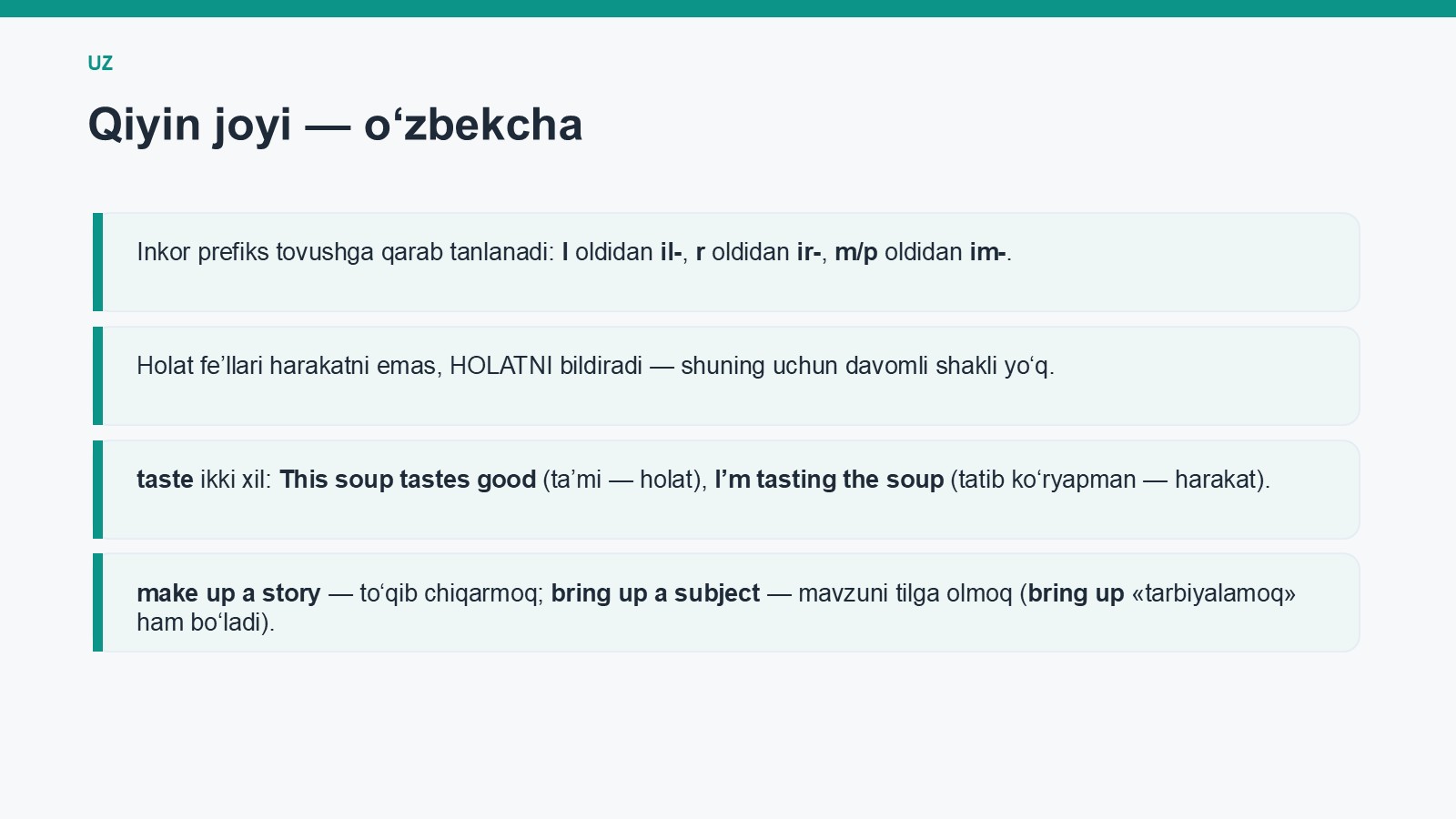
Two pieces of grammar came back again and again. First, negative prefixes: legal → illegal, fair → unfair, polite → impolite, relevant → irrelevant. Second, stative verbs — see, believe, understand, taste — which normally take the simple form, not the continuous.
And five phrasal verbs are worth learning by heart: people turn up without an invitation, problems come up in meetings, we try not to bring up difficult subjects, someone once came up with the idea of computer games, and Tony is always making up stories.
Savollar: 1. What is the difference between a generous person and a selfish one? · 2. Which two transport words in the text are about water? · 3. Why can't you say 'I am believing you'? · 4. Which phrasal verb means 'to invent a story'?