Five ways to make a living
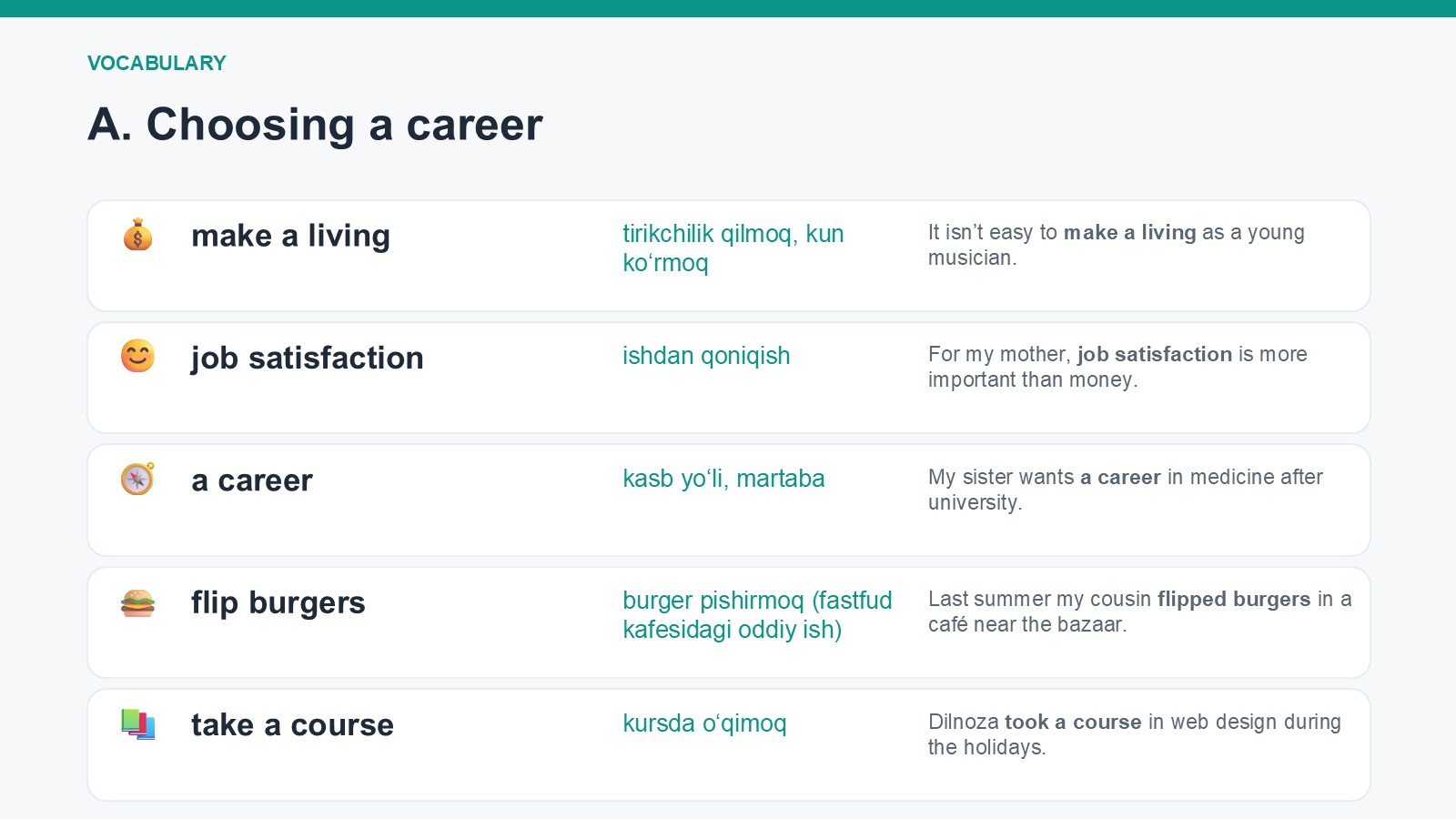
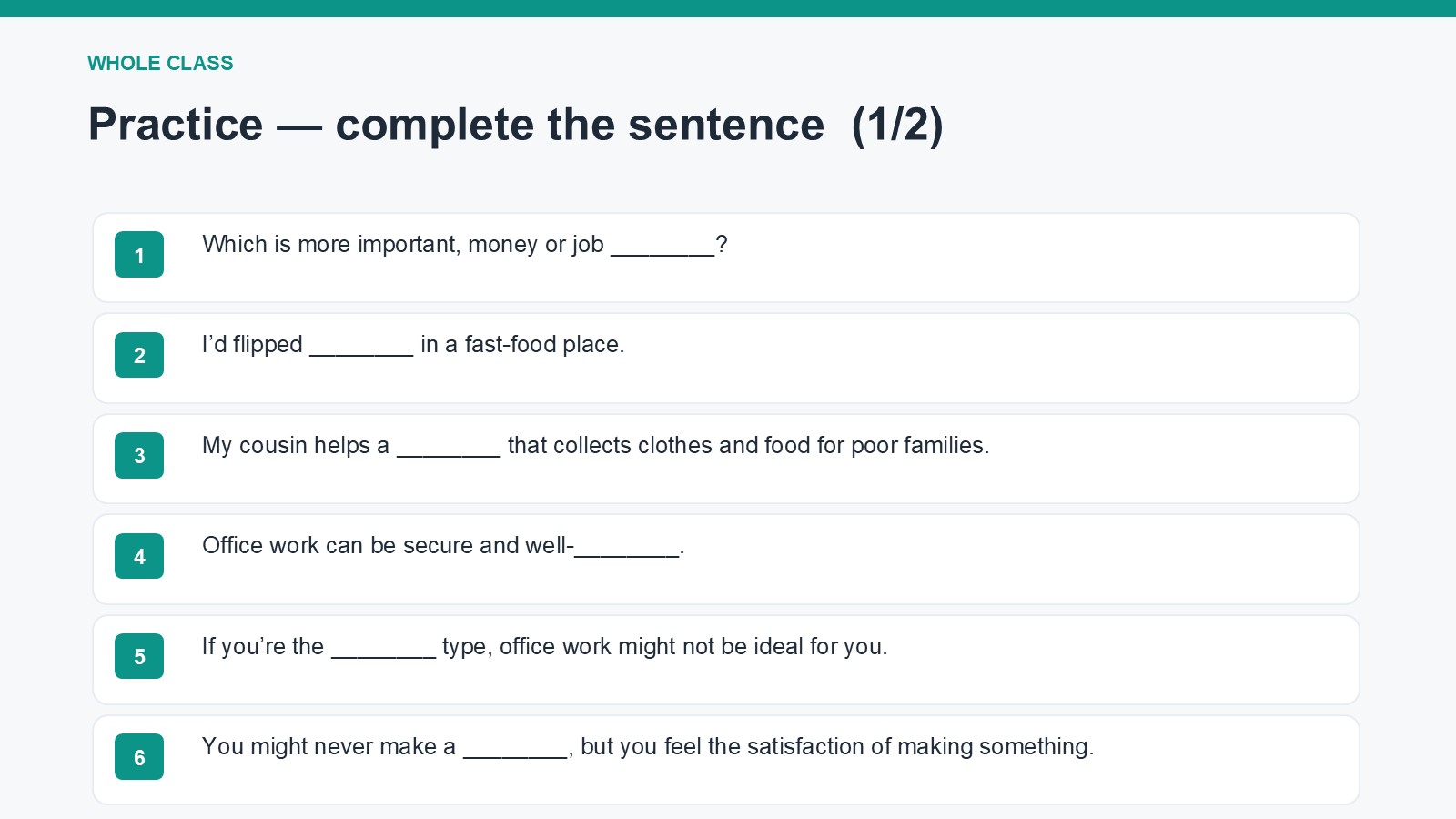
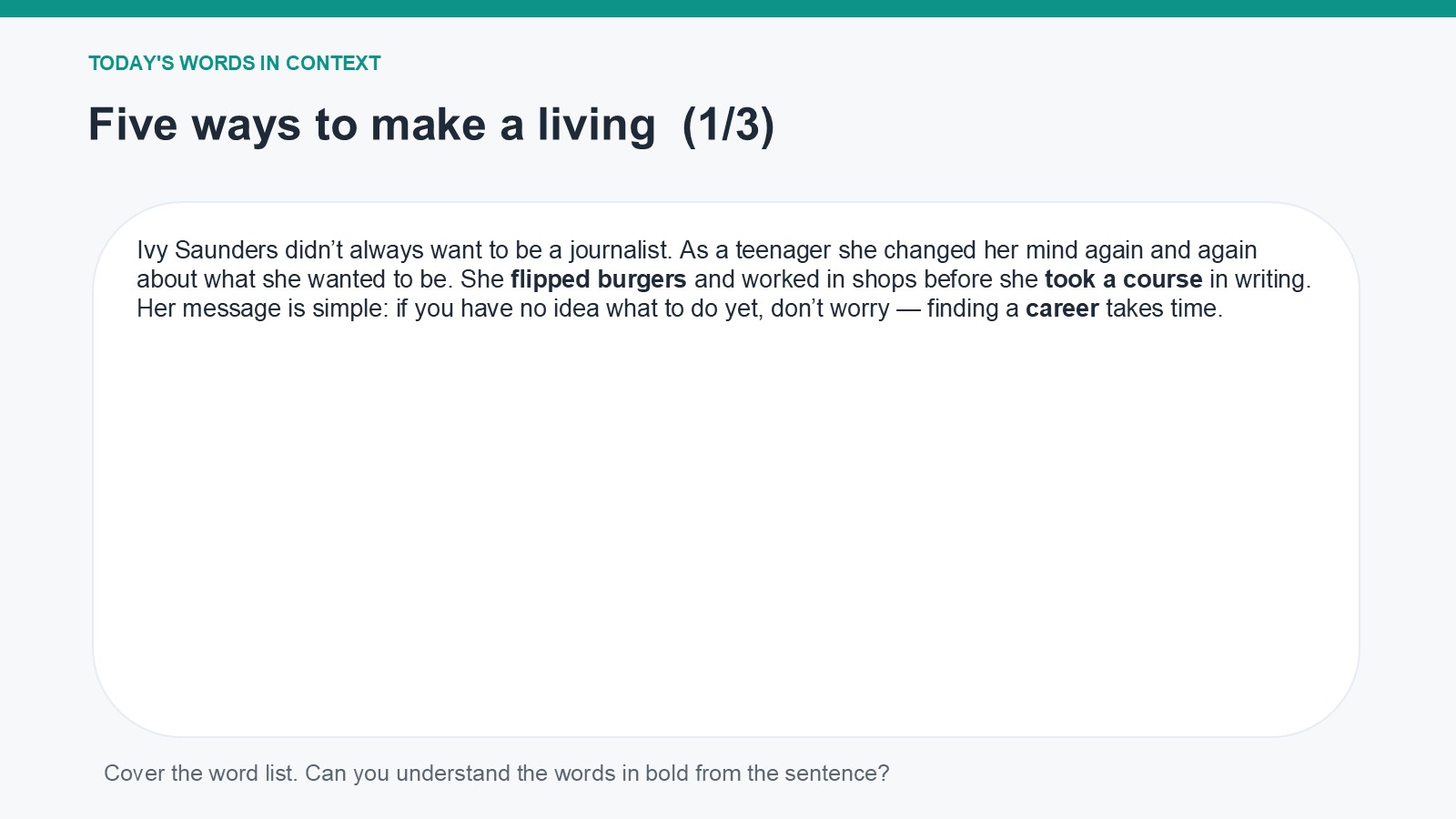
Ivy Saunders didn’t always want to be a journalist. As a teenager she changed her mind again and again about what she wanted to be. She flipped burgers and worked in shops before she took a course in writing. Her message is simple: if you have no idea what to do yet, don’t worry — finding a career takes time.
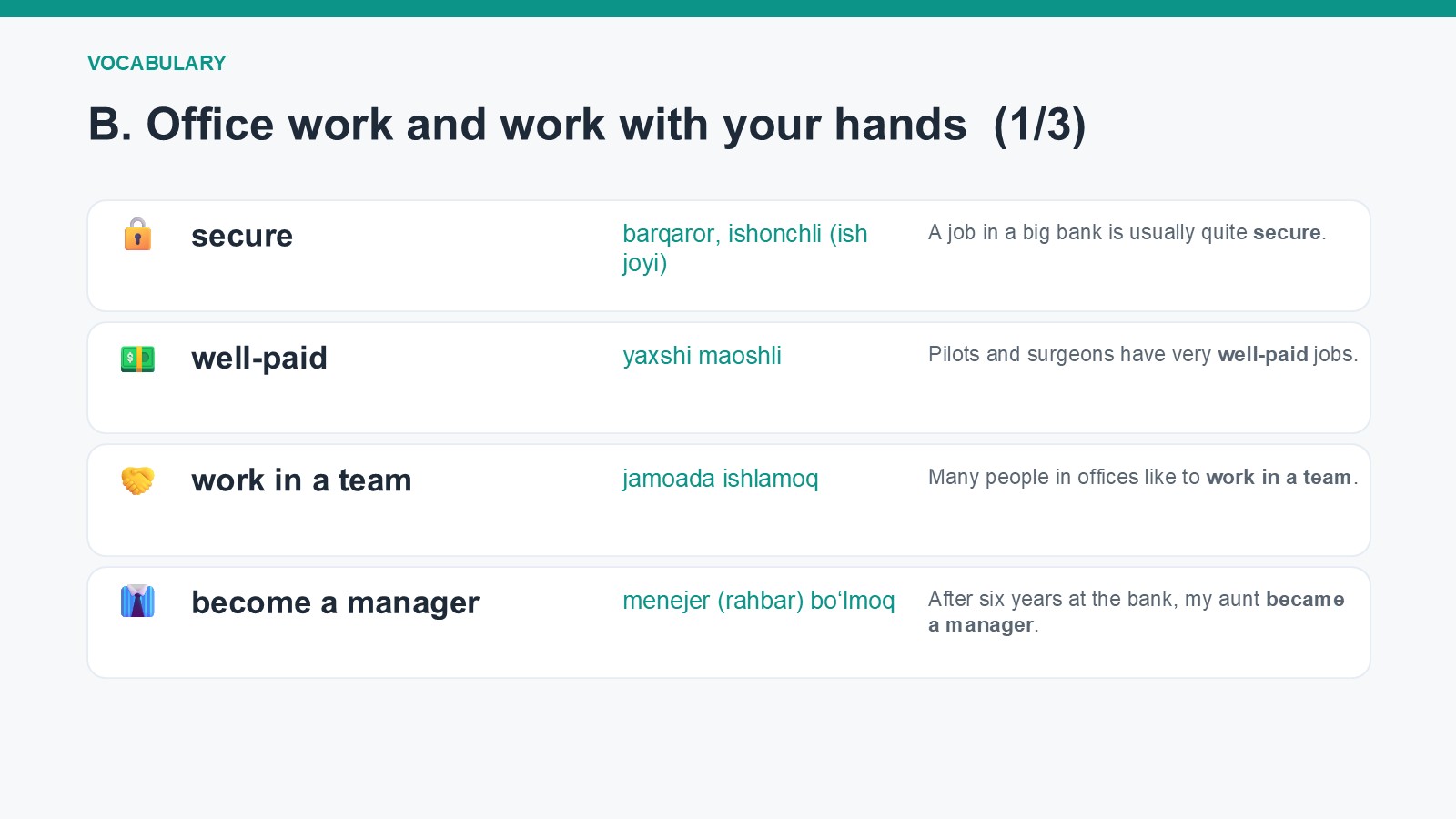
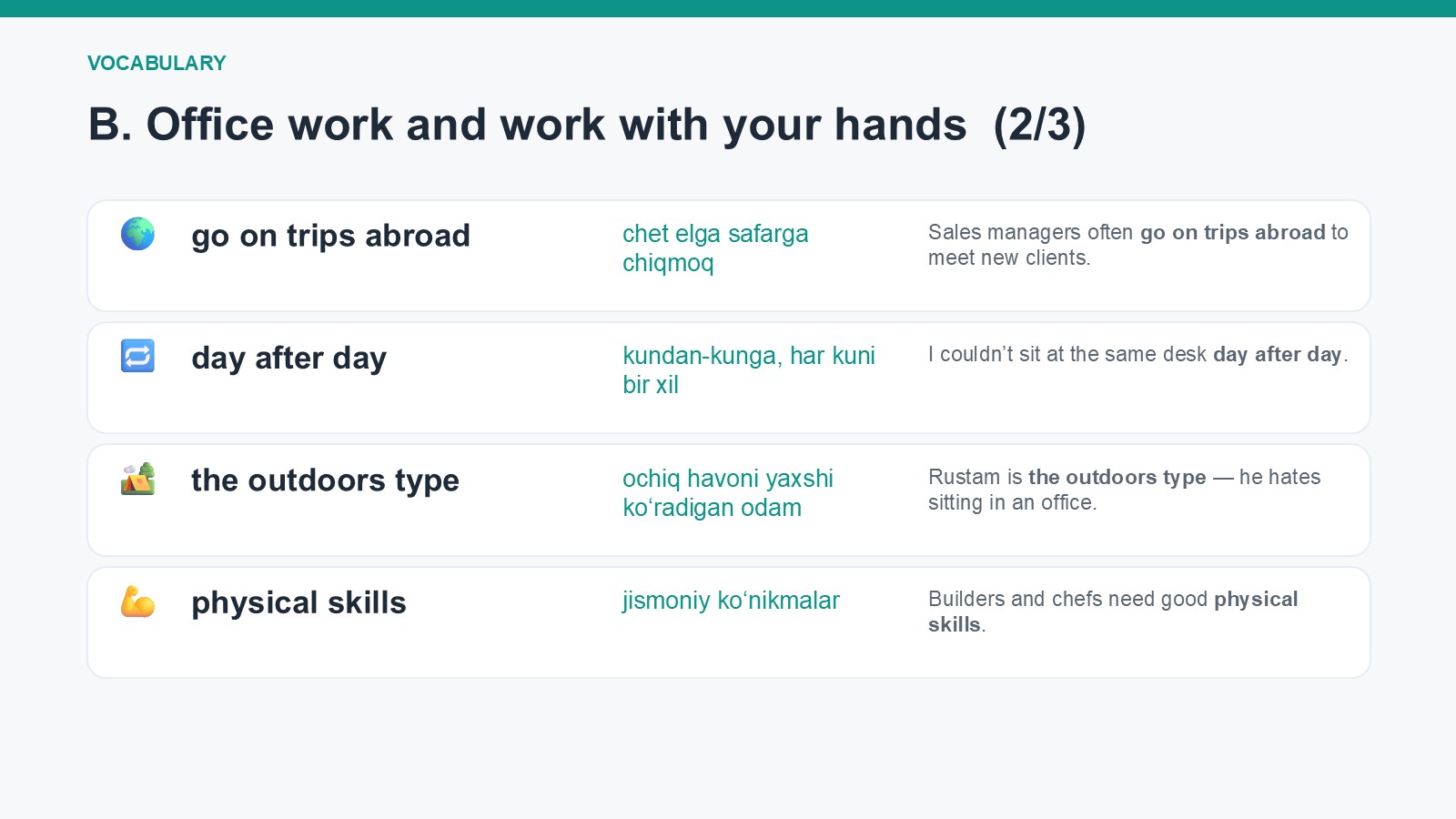
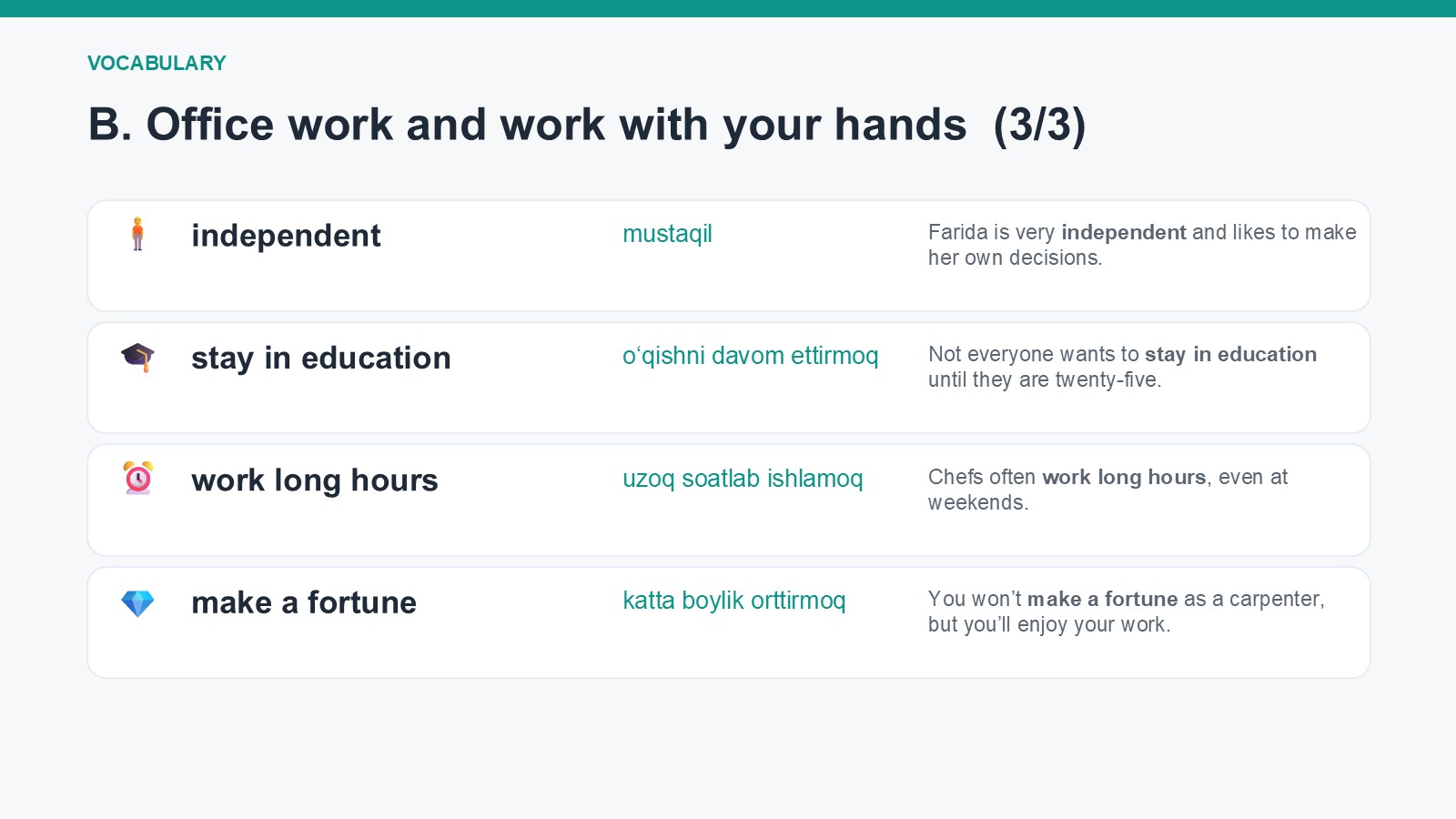
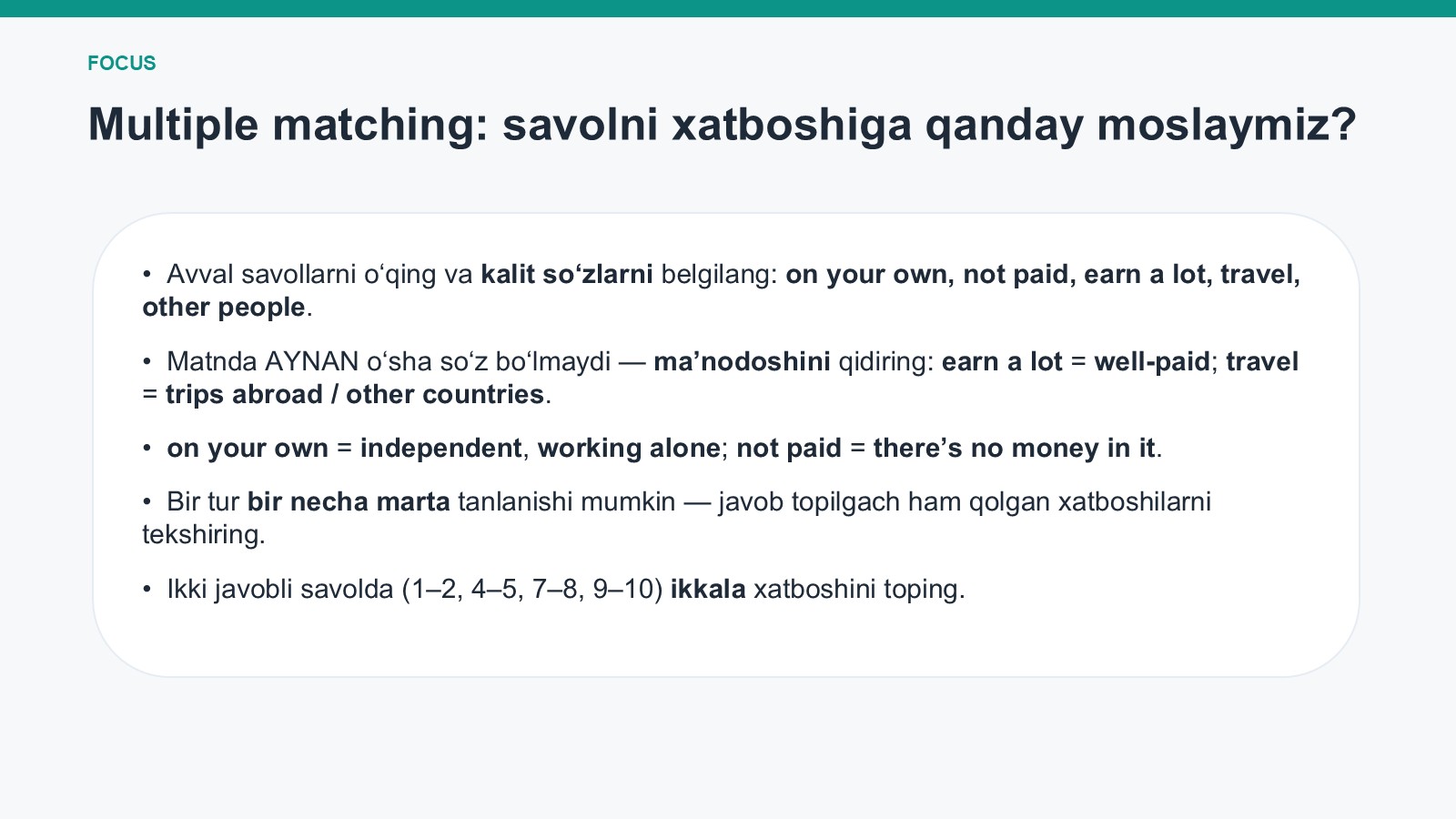
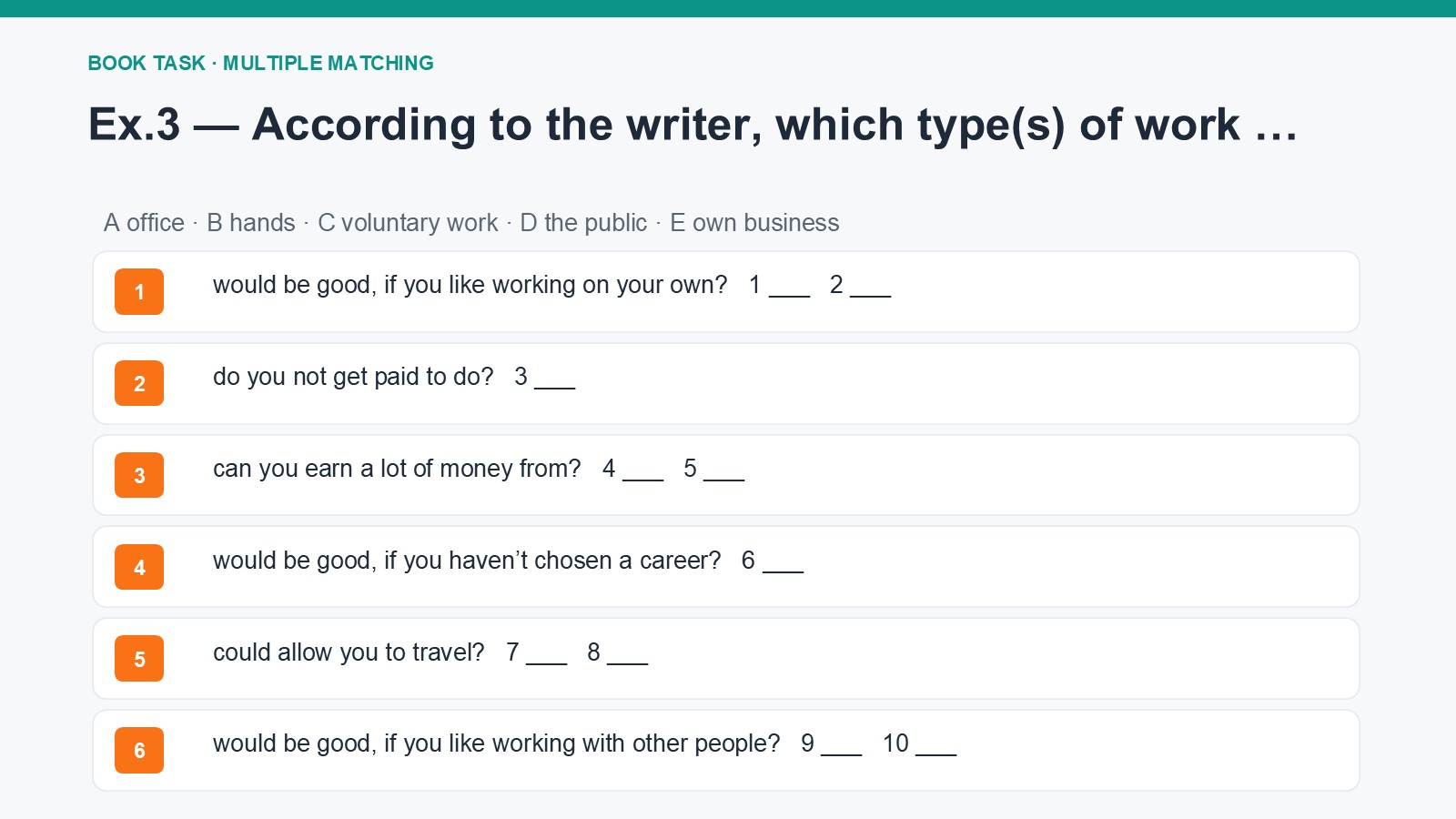
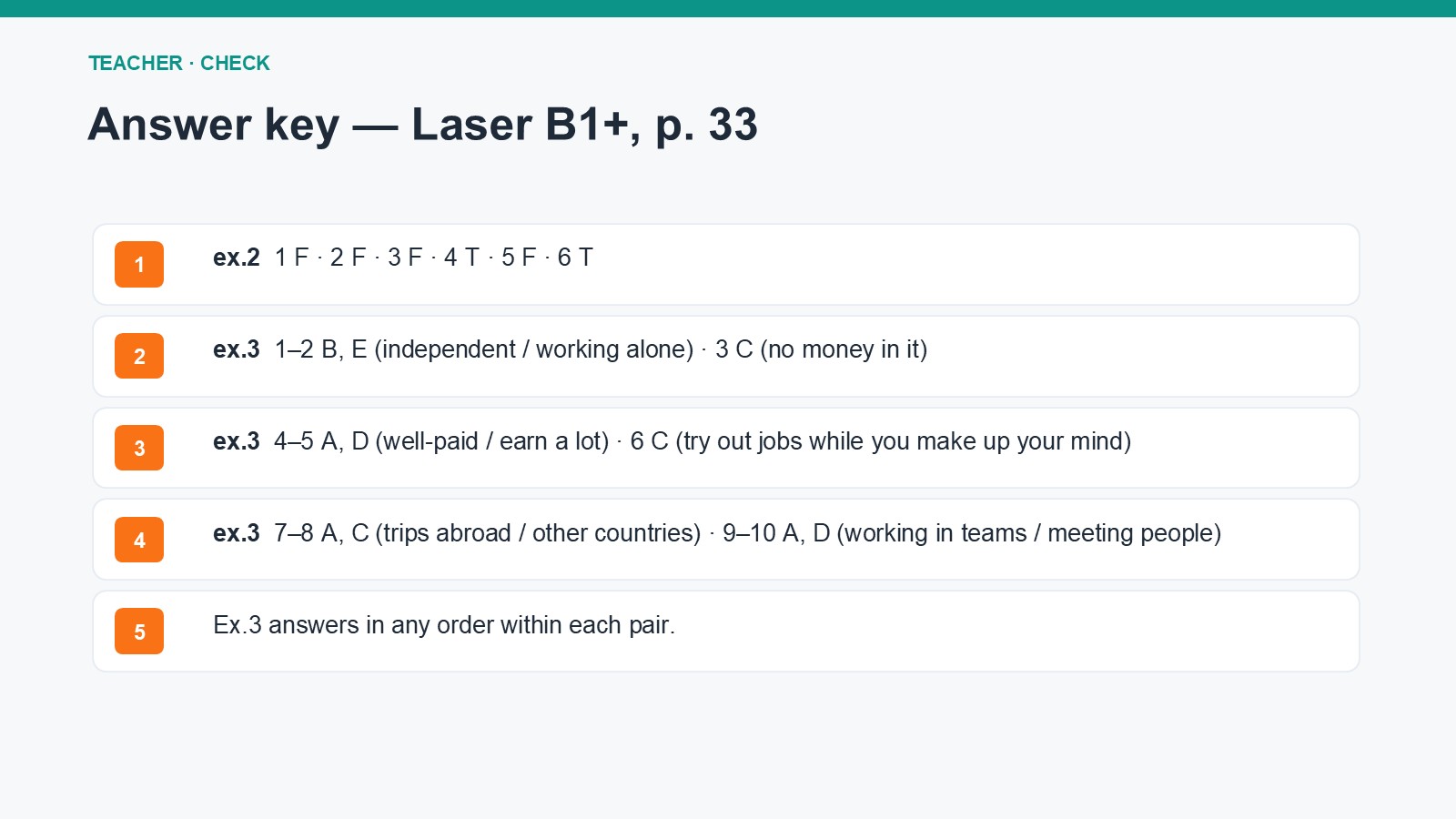
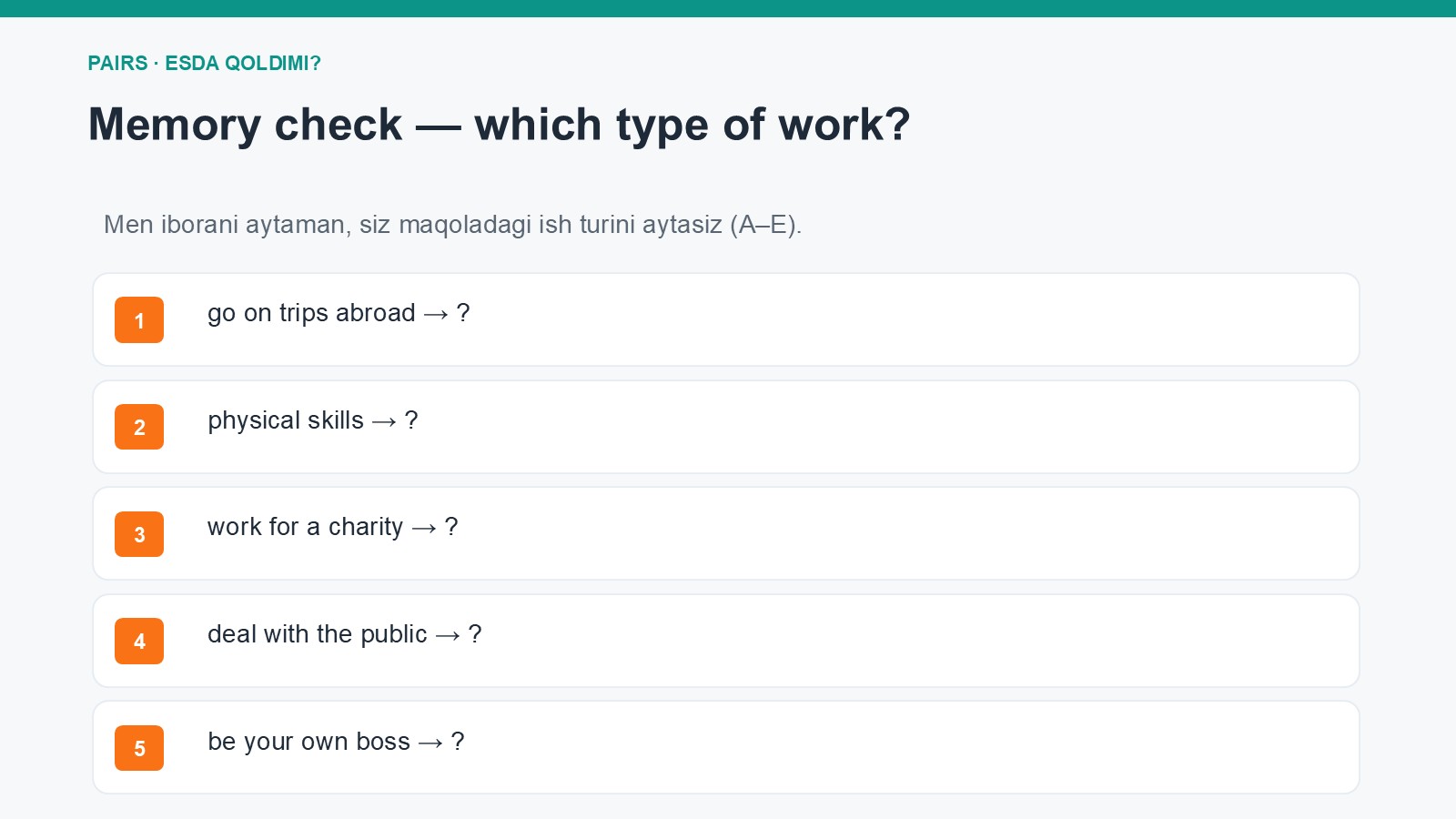
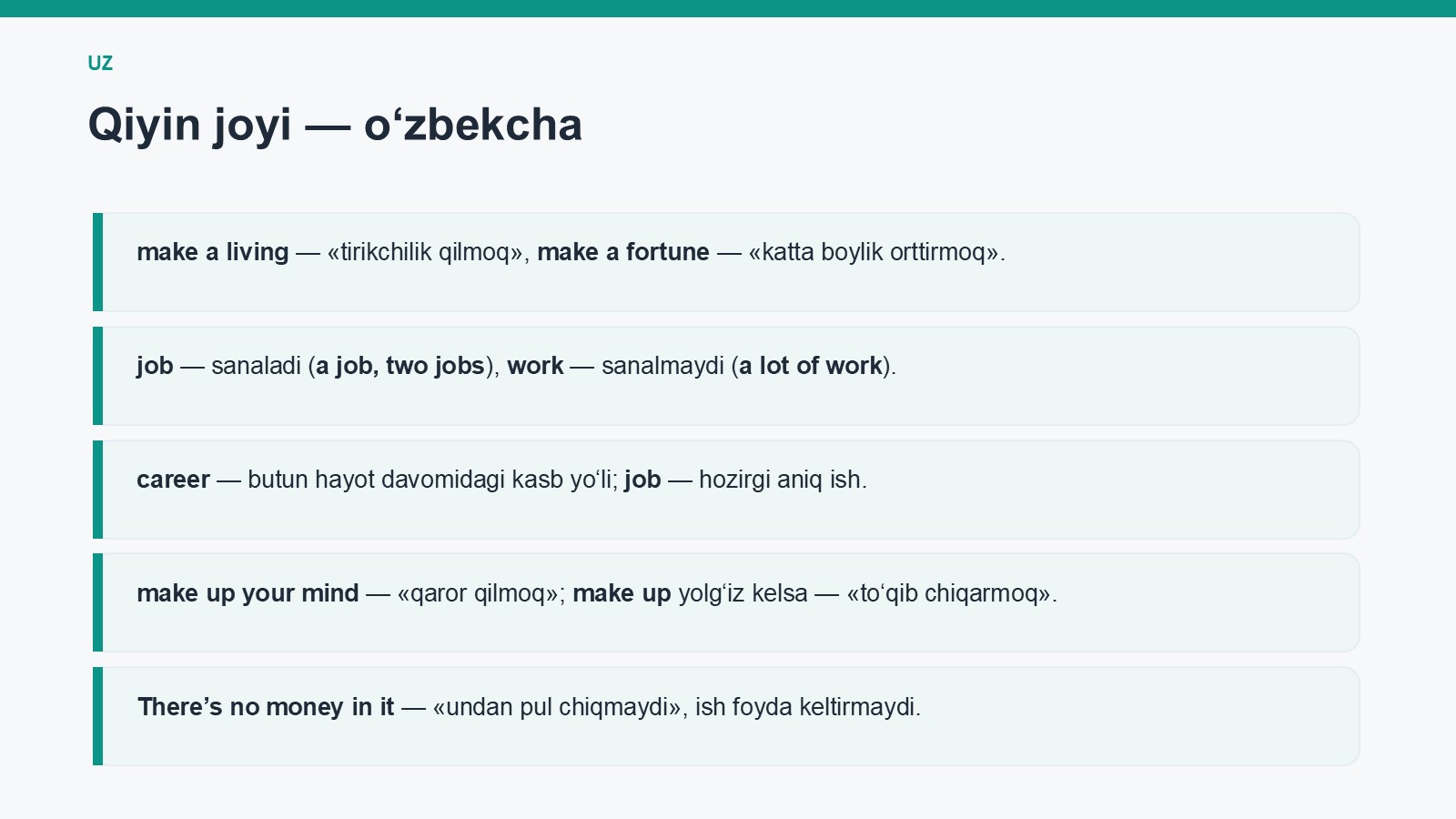
Office work is secure and often well-paid, you usually work in a team, and you may go on trips abroad. But if you’re the outdoors type, sitting at a desk day after day could be hard. Work with your hands suits independent people with good physical skills. You may work long hours and never make a fortune, but you get the satisfaction of making something.
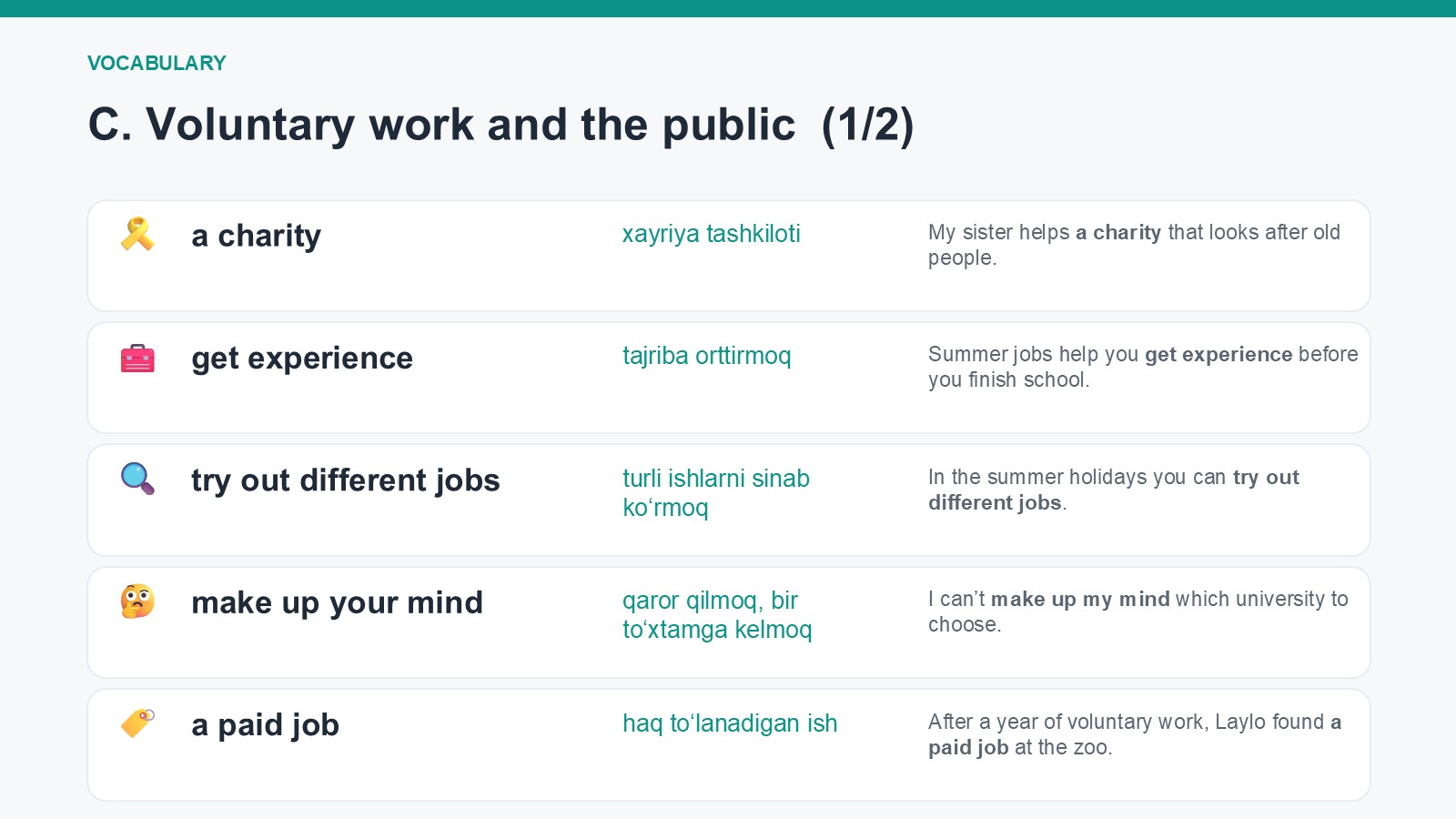
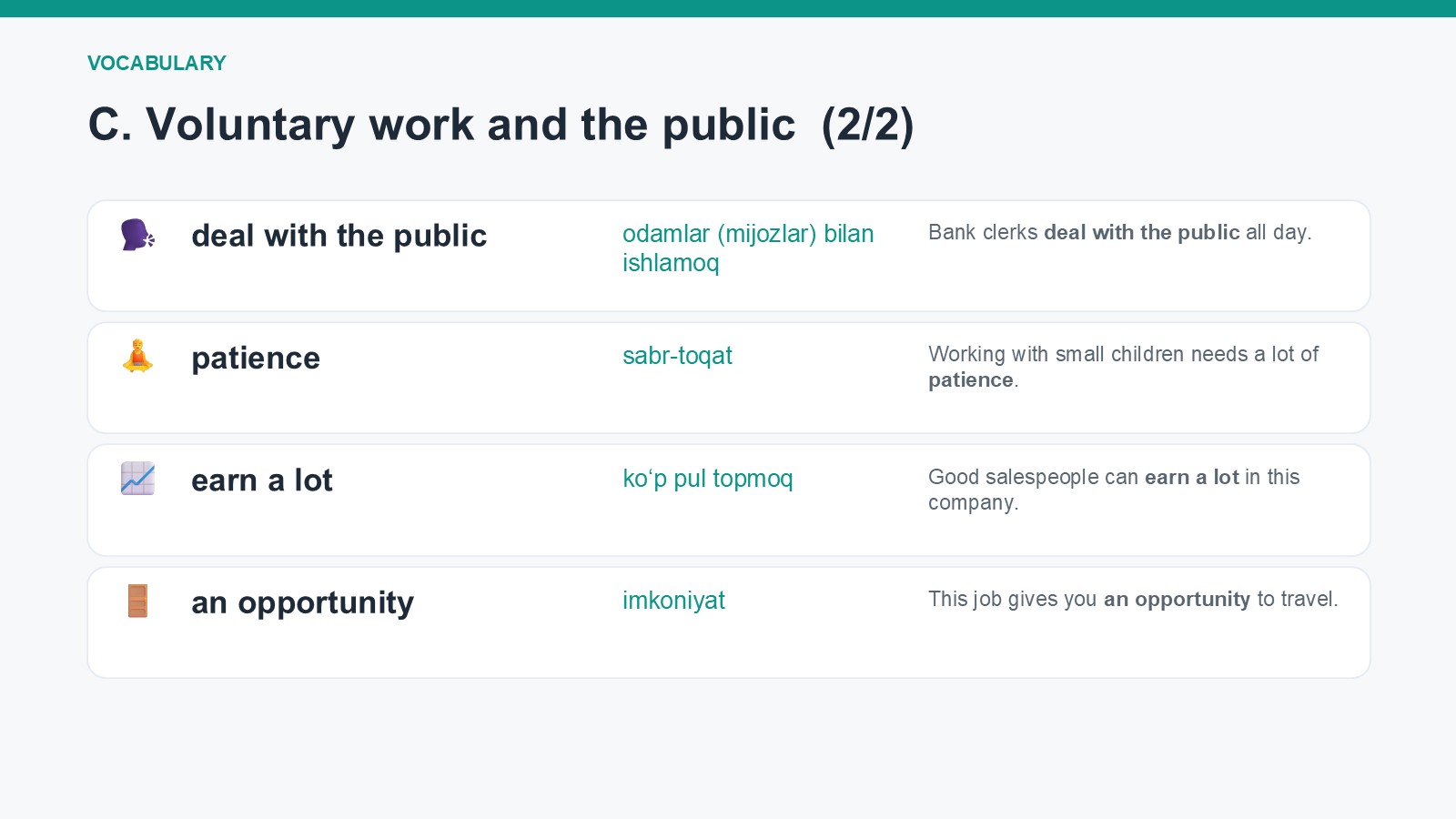
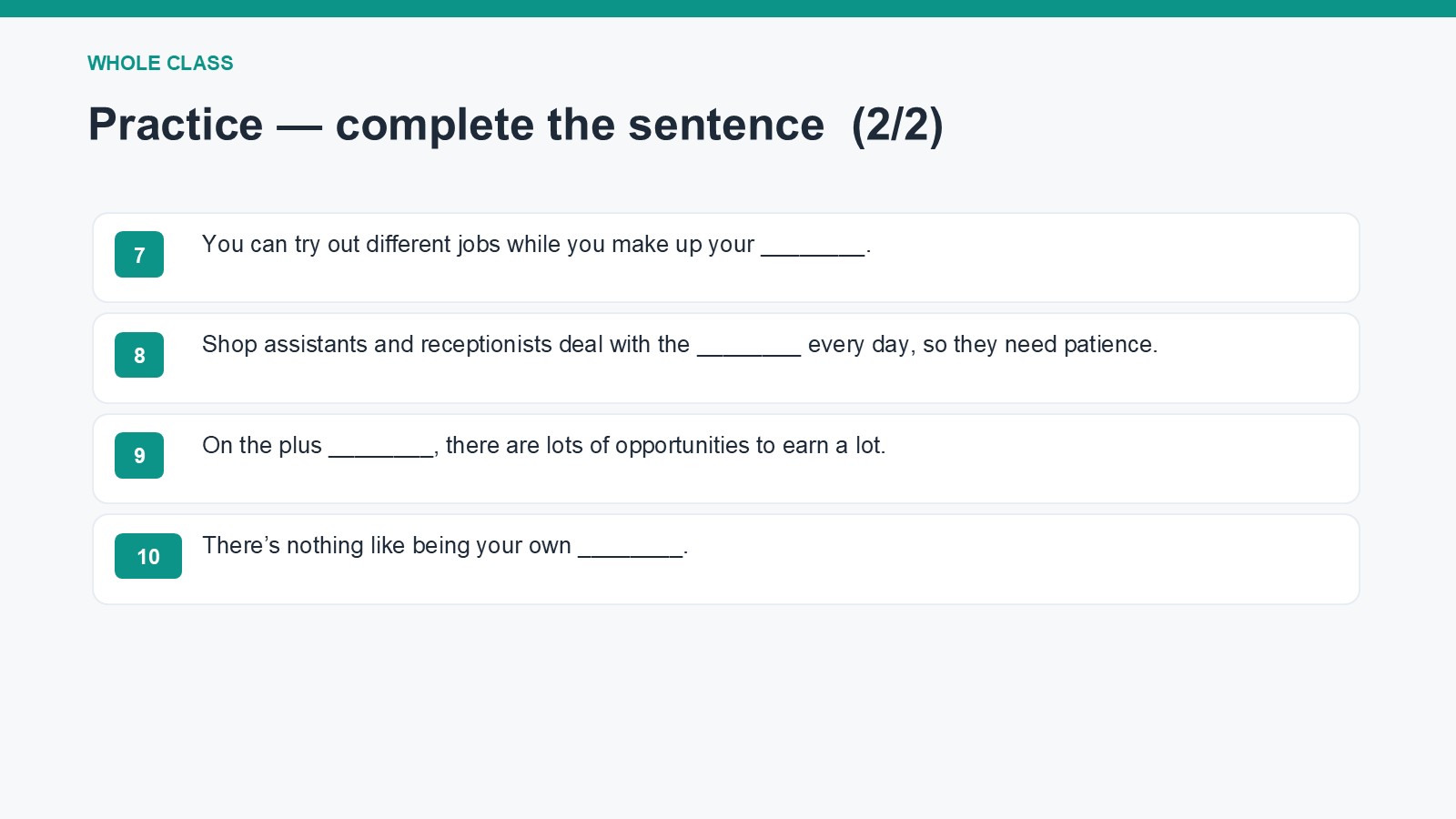
Voluntary work for a charity isn’t paid — there’s no money in it — but it is a useful step to a paid job. You get lots of experience and can try out different jobs before you make up your mind. Dealing with the public needs patience, but on the plus side you can earn a lot and become a manager.
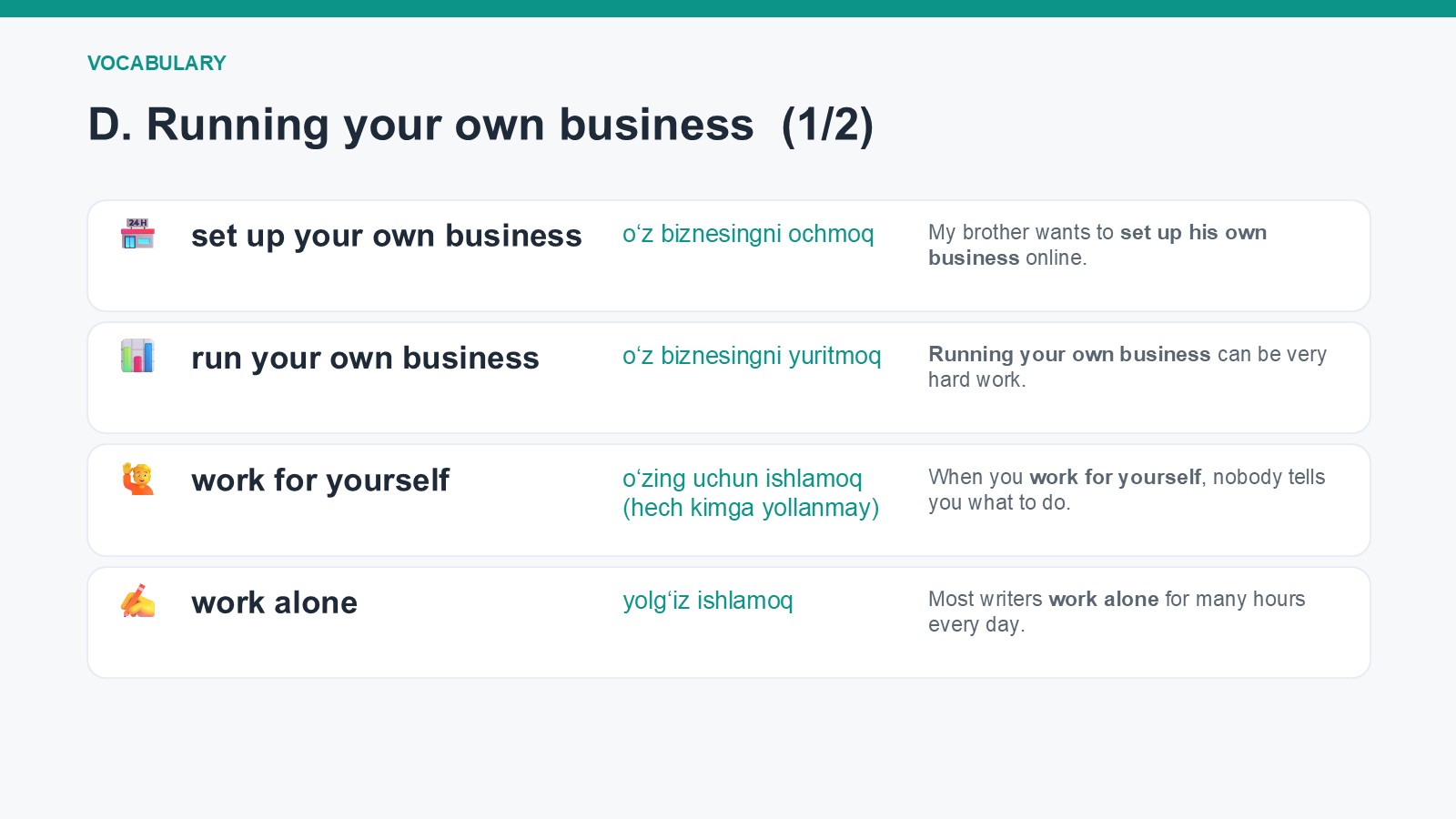
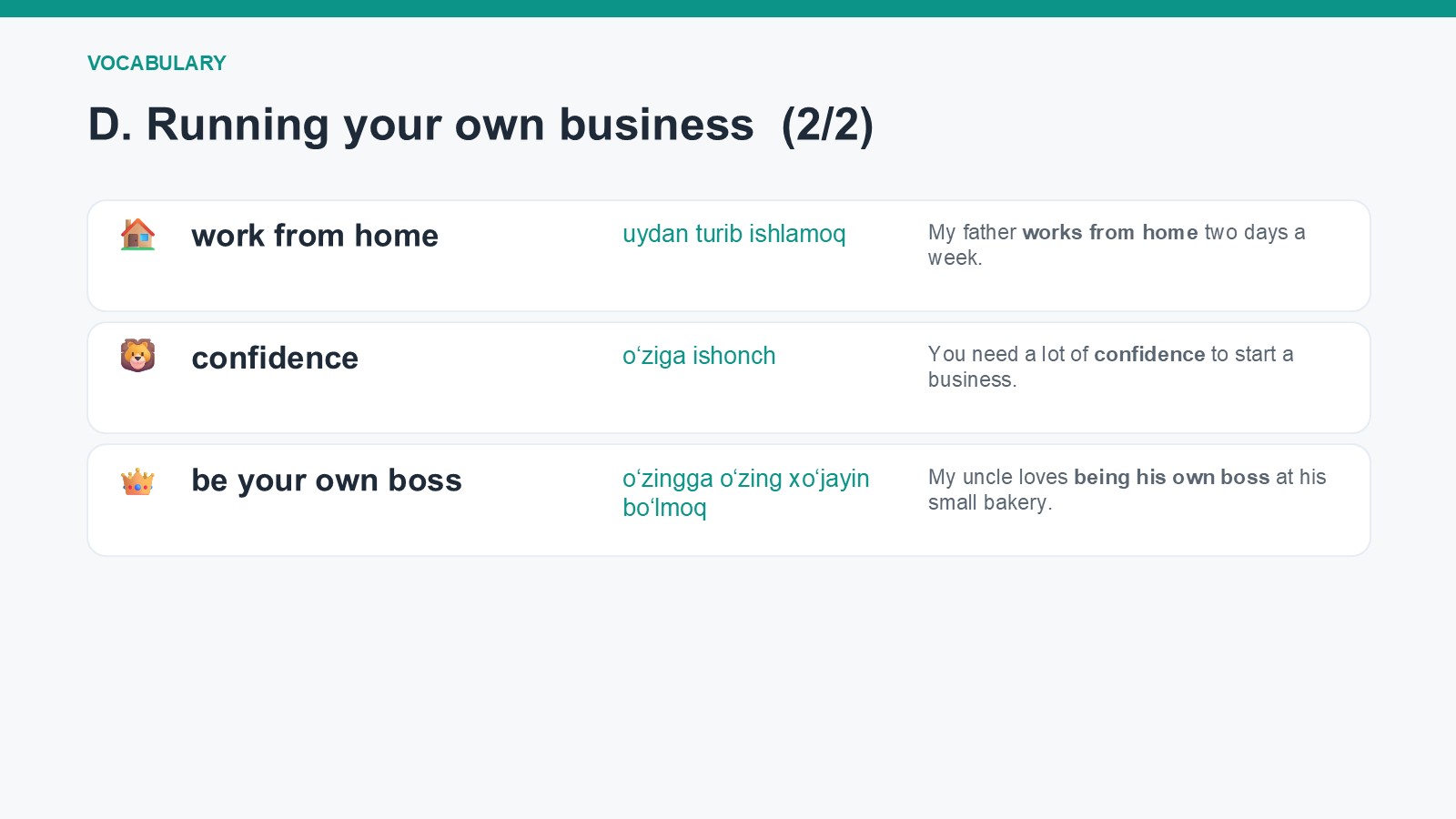
Finally, you can set up your own business and work for yourself. It is hard work, and you need confidence, but it can be very rewarding — and there’s nothing like being your own boss.
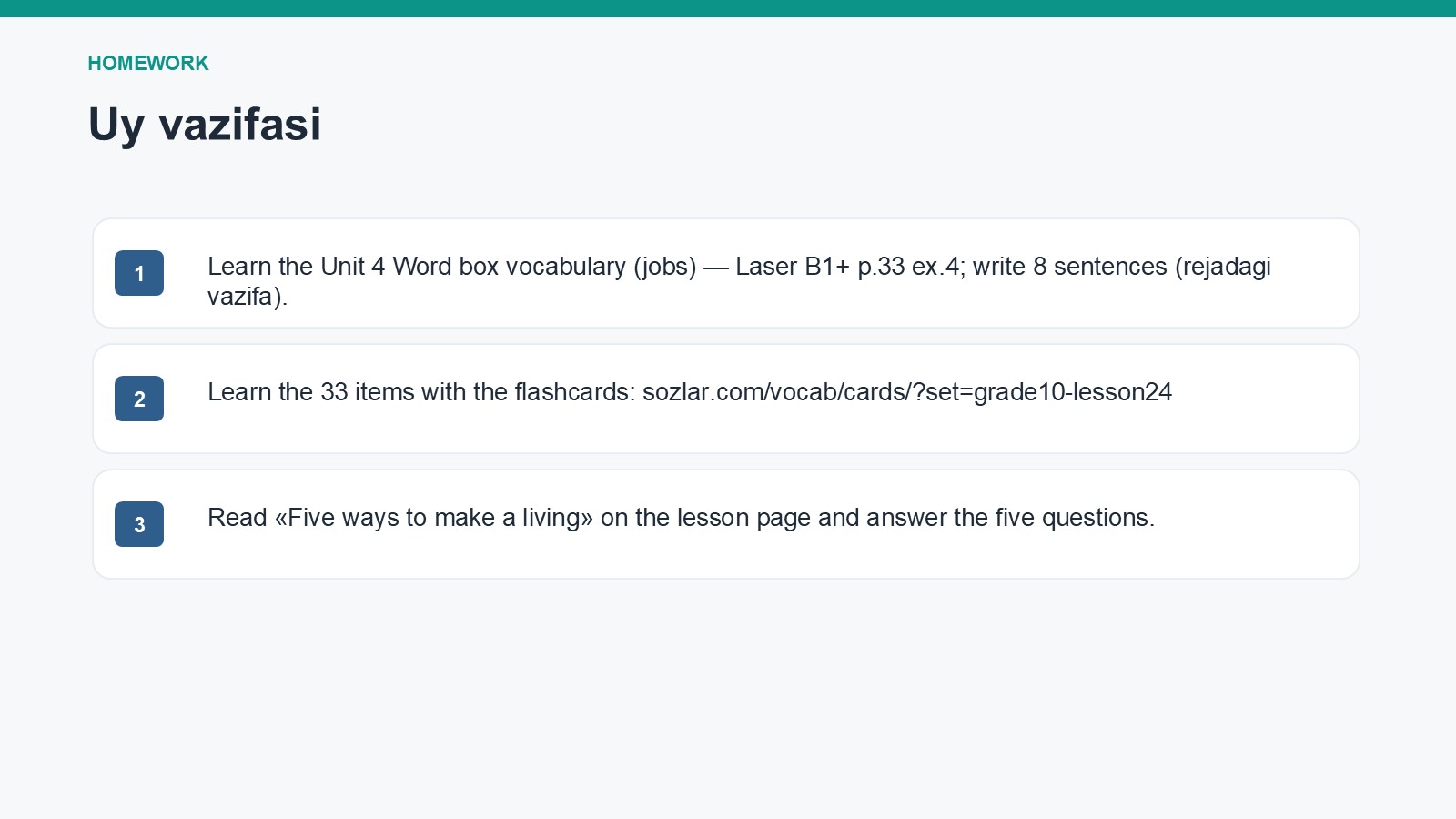
Savollar: 1. What did Ivy Saunders do before she became a journalist? · 2. Who might not like office work? · 3. What is the bad side and the good side of working with your hands? · 4. Why can voluntary work be useful if there’s no money in it? · 5. What do you need to run your own business?