From skis to space — a two-minute history
For thousands of years people travelled on foot. Early humans in the cold north used skis, and after the wheel was invented around 3500 BC, carts appeared — but they were slow without roads. So for many centuries the horse was the fastest means of transport, and its record for speed — about fifty-five kilometres an hour — stayed unbroken.
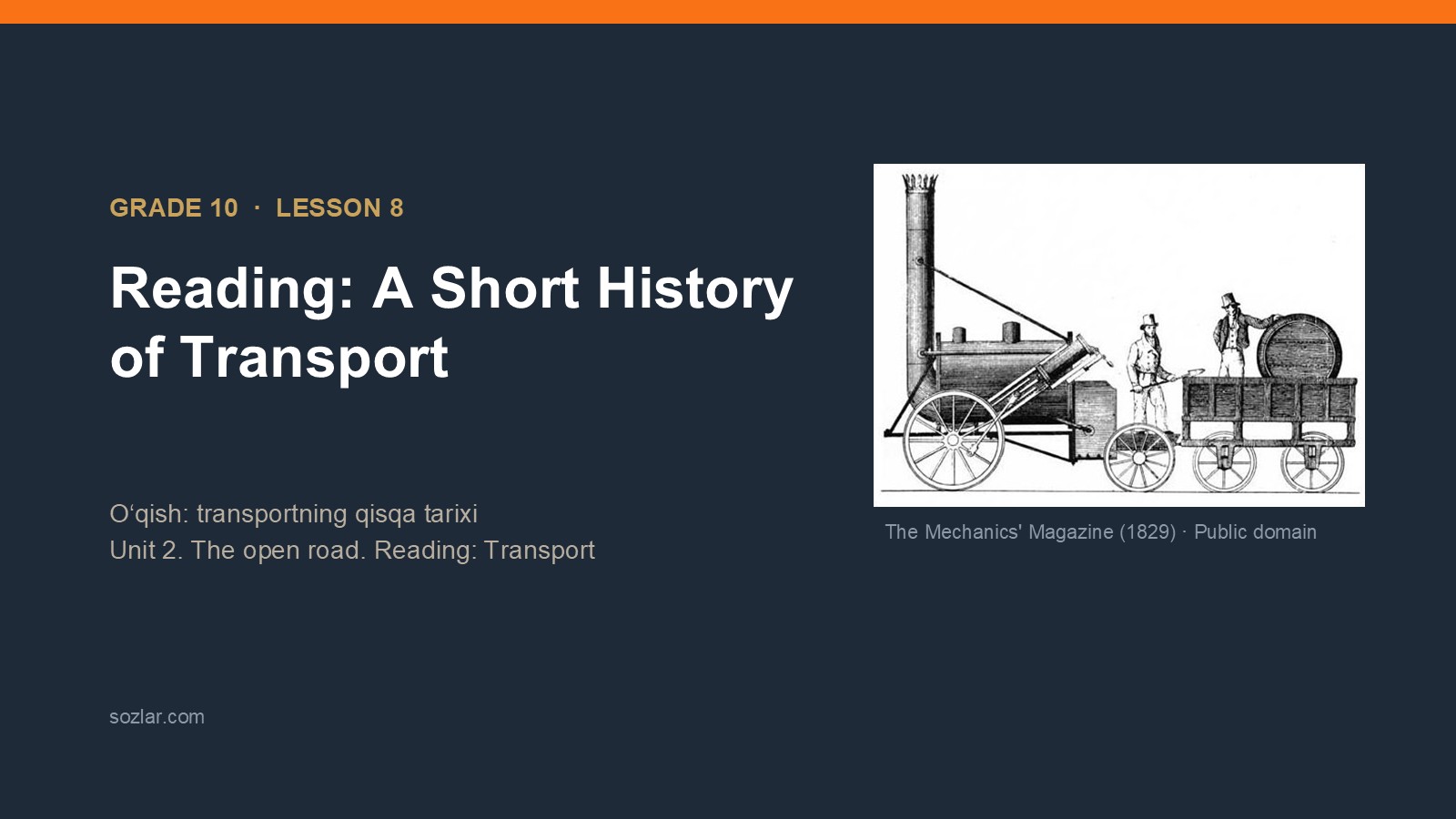
Everything changed at the end of the eighteenth century. In 1783 a hot-air balloon made its first free flight over France; its passengers were admiring the view when the fabric caught fire, but they put the fire out and landed safely. Twenty years later the railway began: the first vehicle with an engine ran on rails — and it soon fell off the tracks, although everyone escaped unharmed.
Perhaps unexpectedly, the bicycle with pedals only arrived around 1840. Then came the petrol-driven car and, in 1903, a short aeroplane flight by the Wright brothers: the dream became a reality, and a huge industry grew from it.
Since the first Moon landing in 1969 we have had the space shuttle and even space tourists. The challenge for the twenty-first century is space — and with new technology it may be as exciting as the past.
Savollar: 1. Why were carts slow? · 2. How fast can a horse run? · 3. What were the balloon passengers doing when the fire started? · 4. Which came first — the train or the bicycle with pedals? · 5. What is the challenge for the twenty-first century?