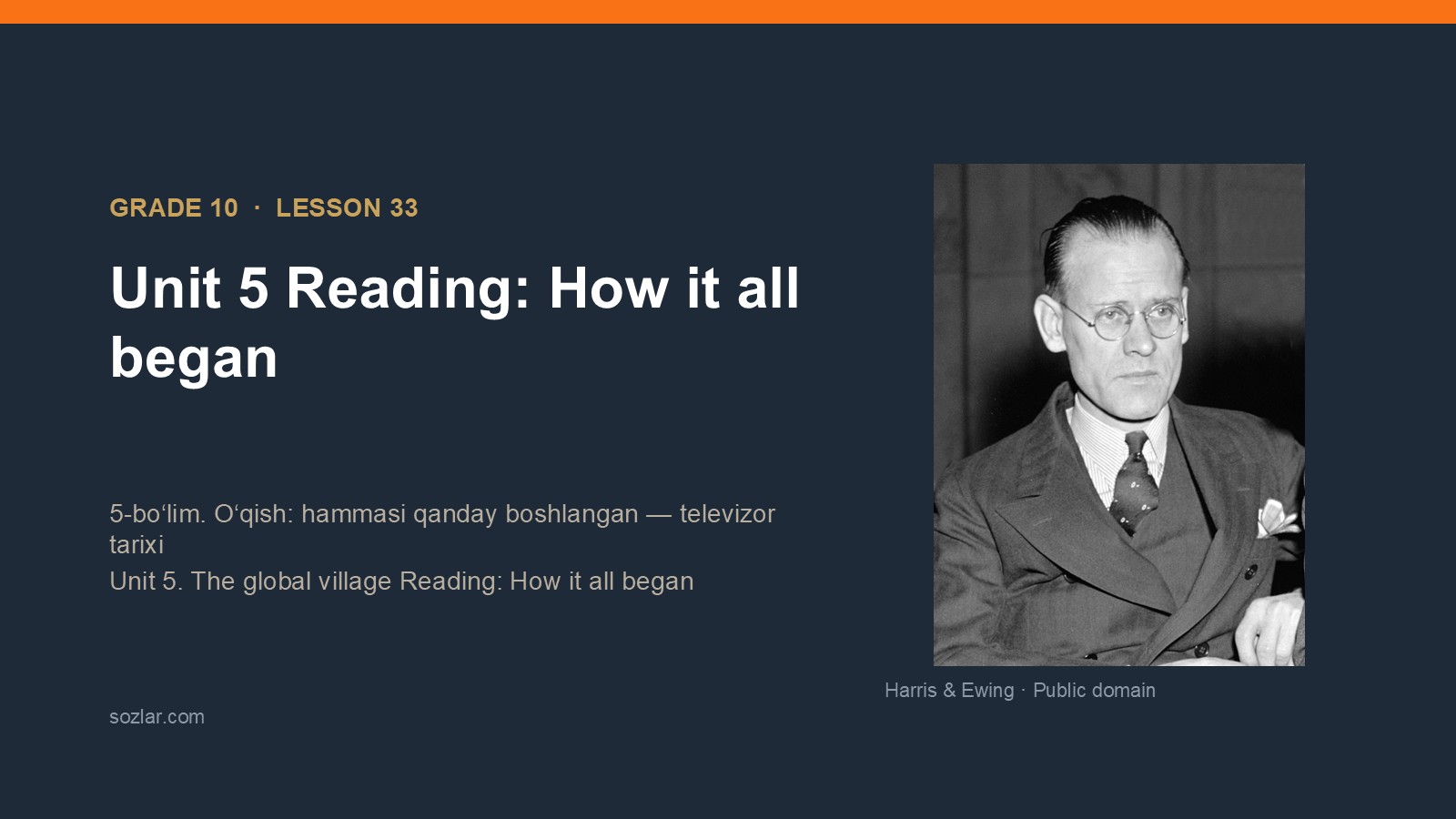
The farm boy who imagined television
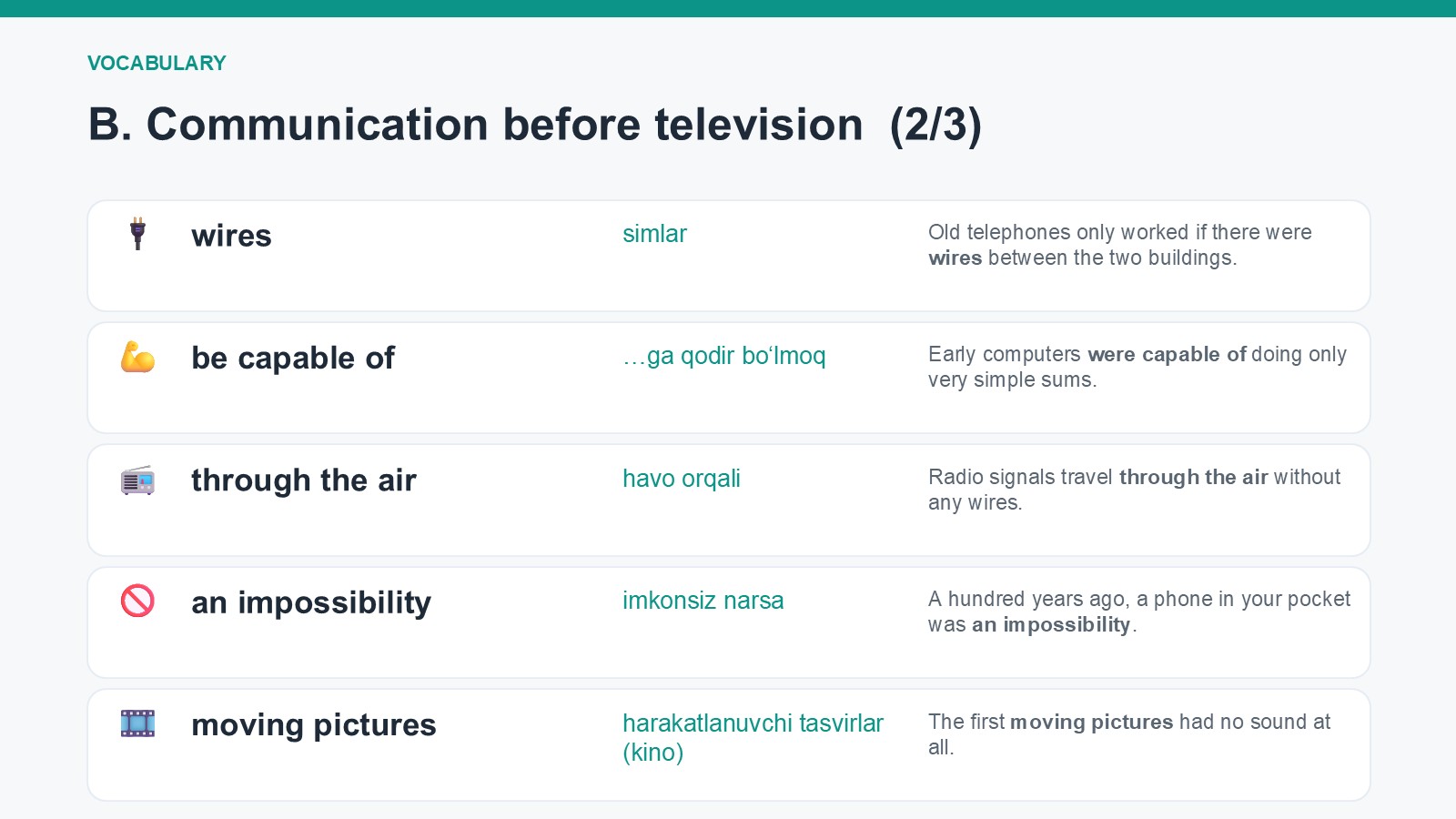
In the nineteenth century, the telegraph and the telephone let people send messages round the world and talk over long distances, but only with wires. Then the radio sent sound through the air. Sending moving pictures the same way seemed an impossibility.
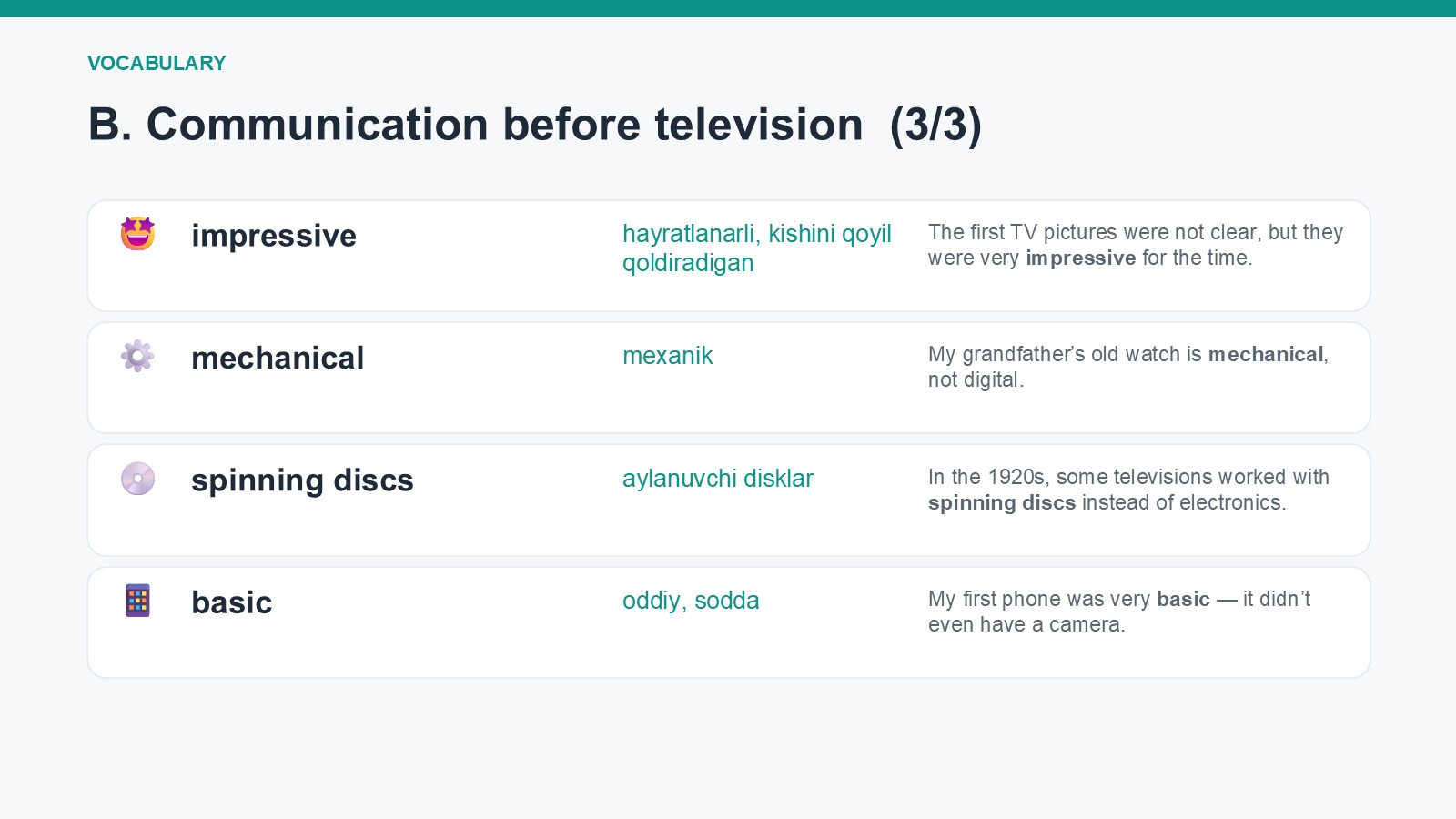
Early inventors built mechanical televisions with spinning discs, but the pictures were very basic. In 1922, a thirteen-year-old farm boy, Philo Farnsworth, who was fascinated by electricity, had a better idea: magnets could control electrons and make an electronic picture.
Philo drew diagrams for his chemistry teacher, but they could not build a working model, and his family was forced to move. Years later he repaired radios, found two investors who agreed to provide the money, and in 1927 he registered the patents and saw the first pictures.
After the Second World War, television became a part of everyday life. Today billions of us watch it — and it all began with an idea in the mind of a young boy.
Savollar: 1. What could the telegraph and the telephone not do without? · 2. What was the problem with mechanical television? · 3. How old was Philo when he had his idea, and what was it? · 4. Why couldn’t Philo and his teacher build the television? · 5. What happened in 1927?