Listening script — two careers officers
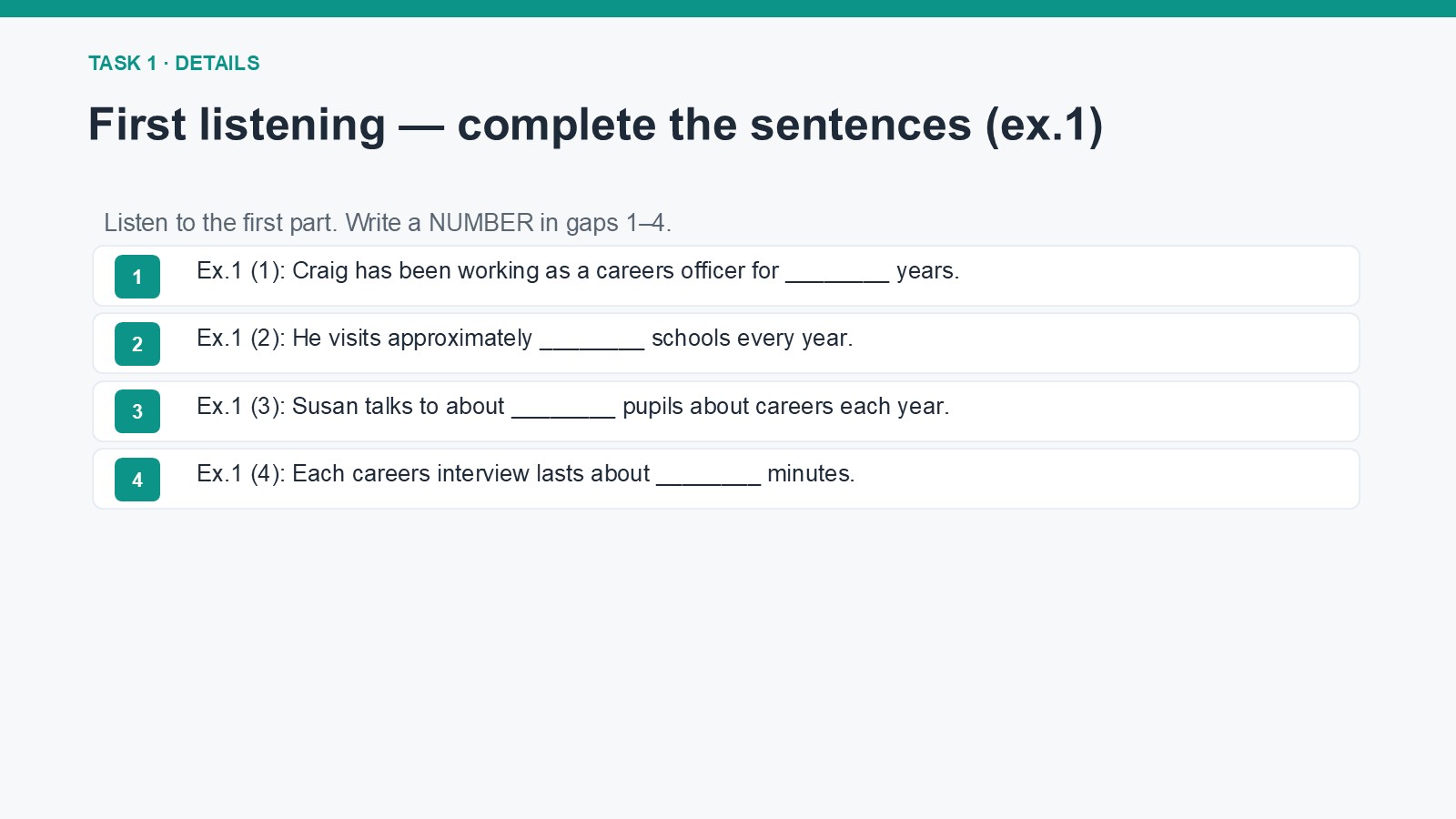
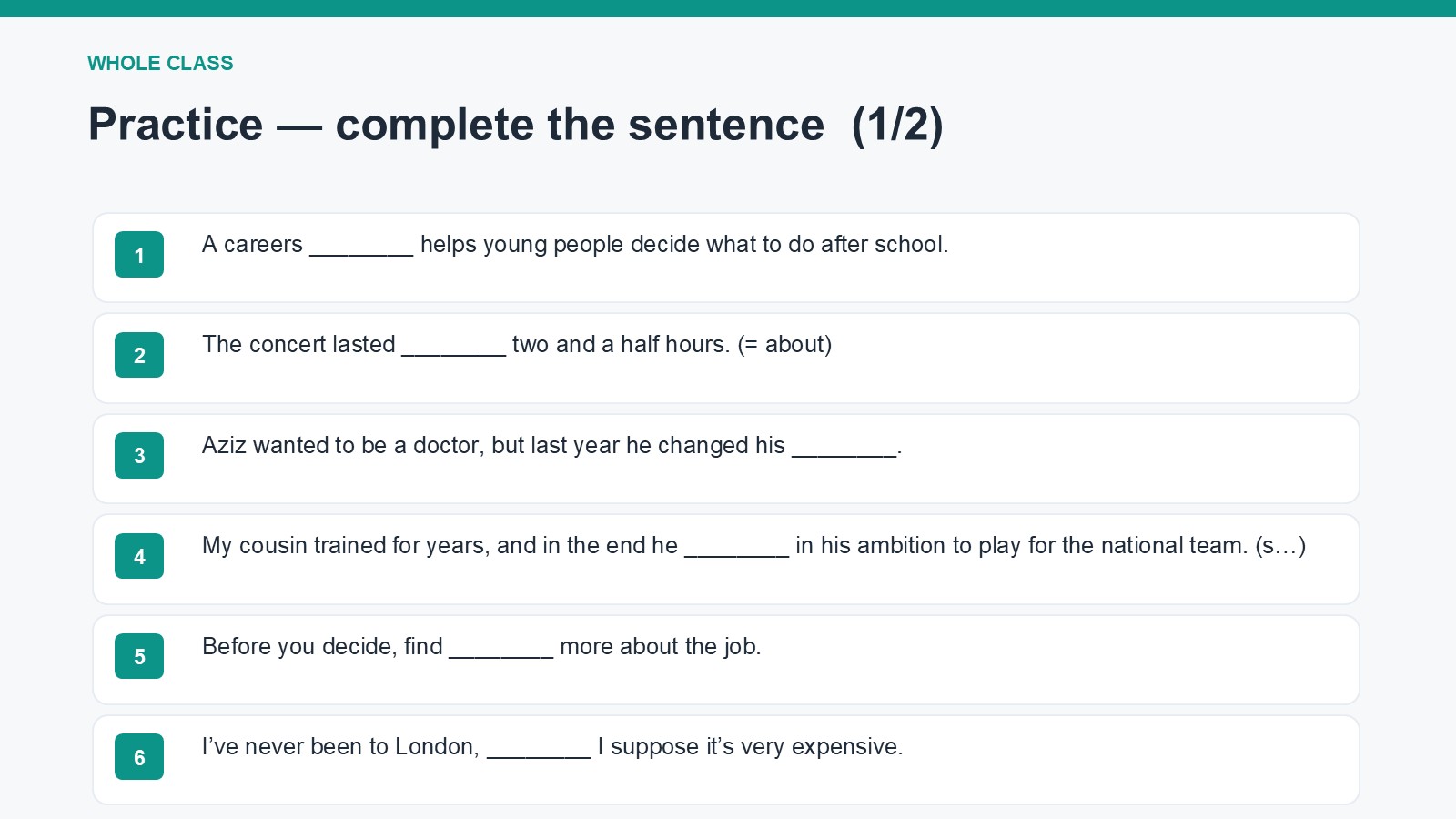
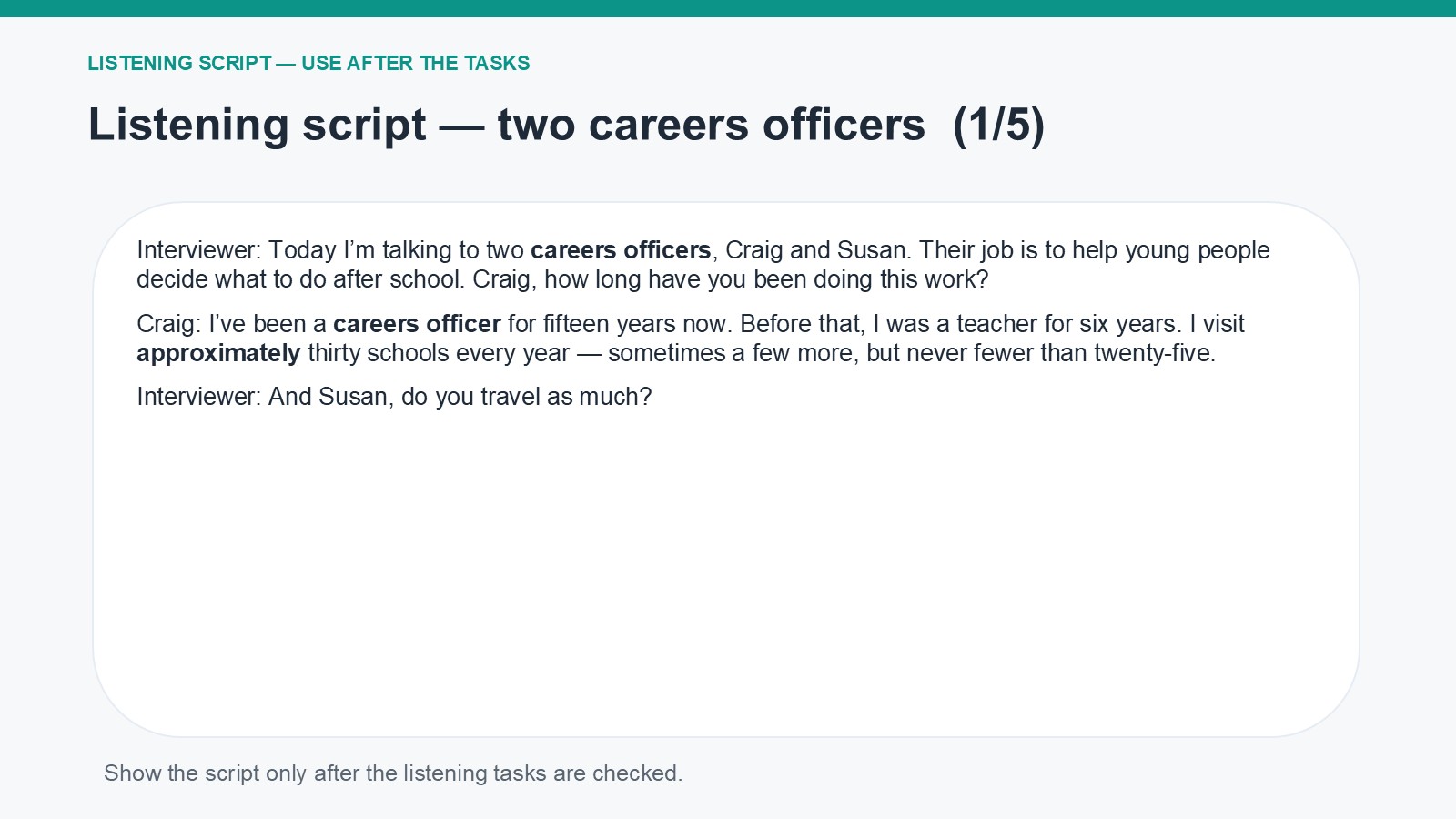
Interviewer: Today I’m talking to two careers officers, Craig and Susan. Their job is to help young people decide what to do after school. Craig, how long have you been doing this work?
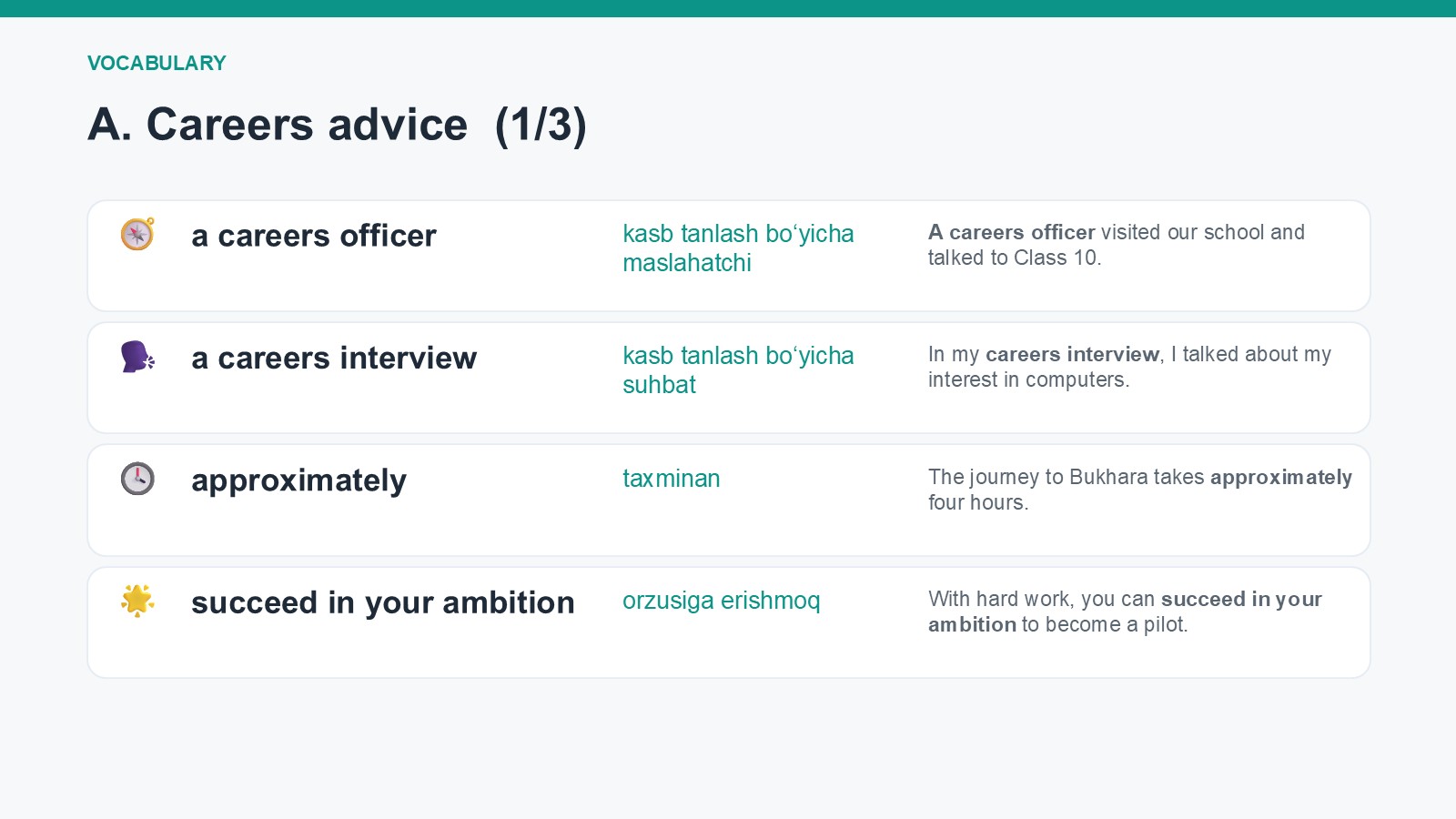
Craig: I’ve been a careers officer for fifteen years now. Before that, I was a teacher for six years. I visit approximately thirty schools every year — sometimes a few more, but never fewer than twenty-five.
Interviewer: And Susan, do you travel as much?
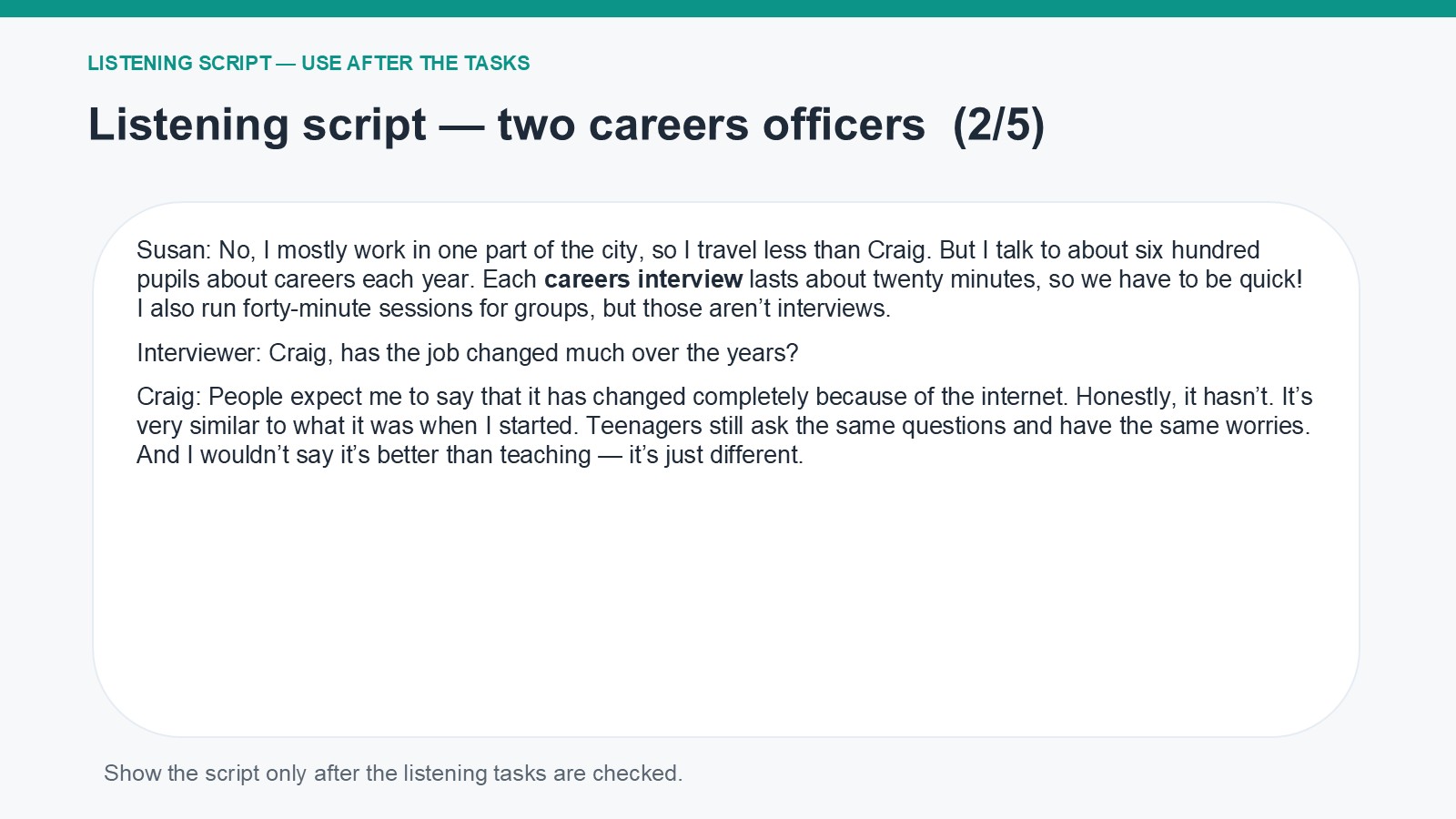
Susan: No, I mostly work in one part of the city, so I travel less than Craig. But I talk to about six hundred pupils about careers each year. Each careers interview lasts about twenty minutes, so we have to be quick! I also run forty-minute sessions for groups, but those aren’t interviews.
Interviewer: Craig, has the job changed much over the years?
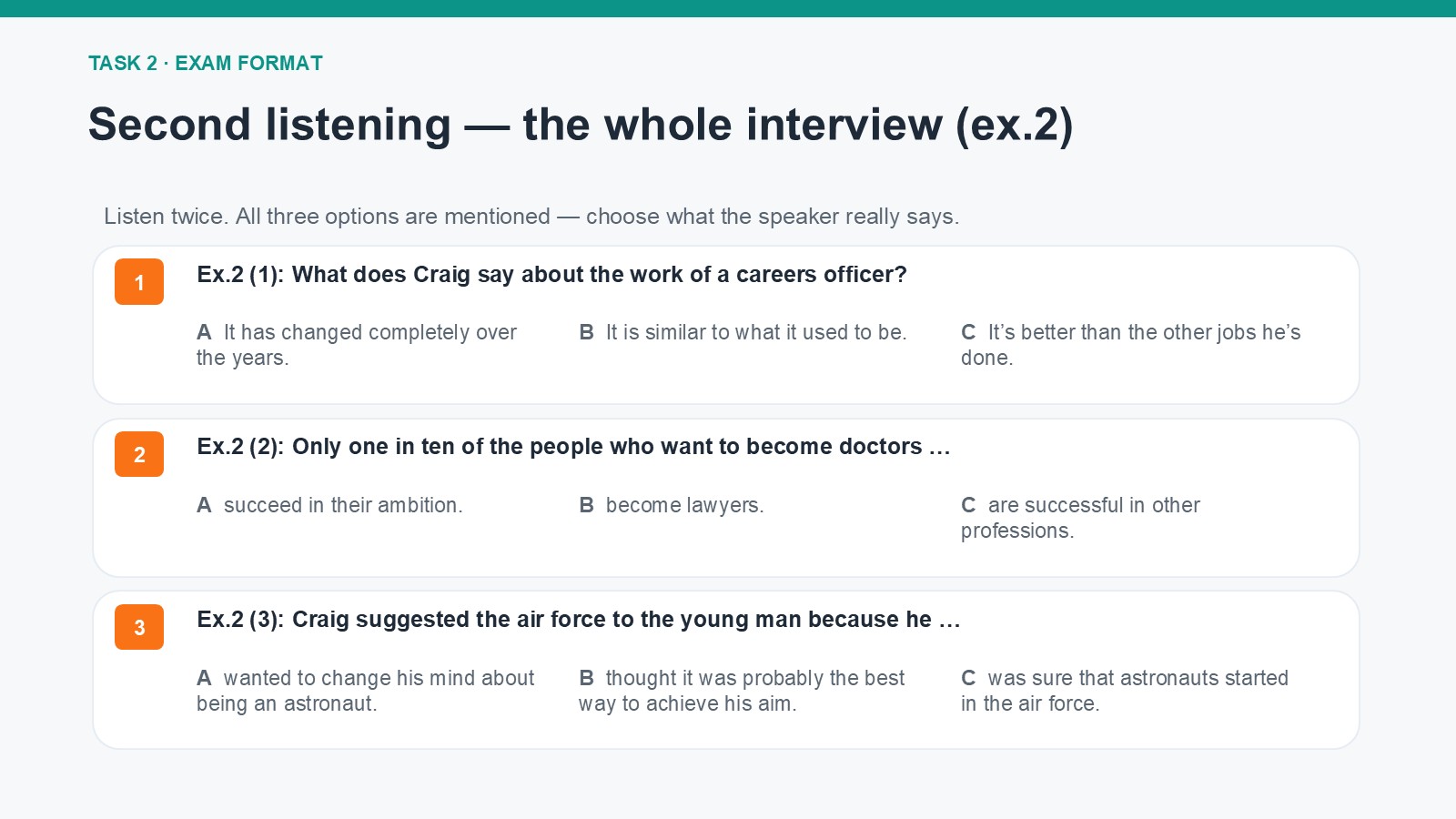
Craig: People expect me to say that it has changed completely because of the internet. Honestly, it hasn’t. It’s very similar to what it was when I started. Teenagers still ask the same questions and have the same worries. And I wouldn’t say it’s better than teaching — it’s just different.
Interviewer: Lots of teenagers want to be doctors, don’t they?
Craig: They do. But only about one in ten of the young people who tell me they want to become doctors actually manage it. The others go in many different directions. Some study law, some become nurses or scientists, and plenty of them do very well.
Interviewer: What’s the most unusual ambition you’ve heard?
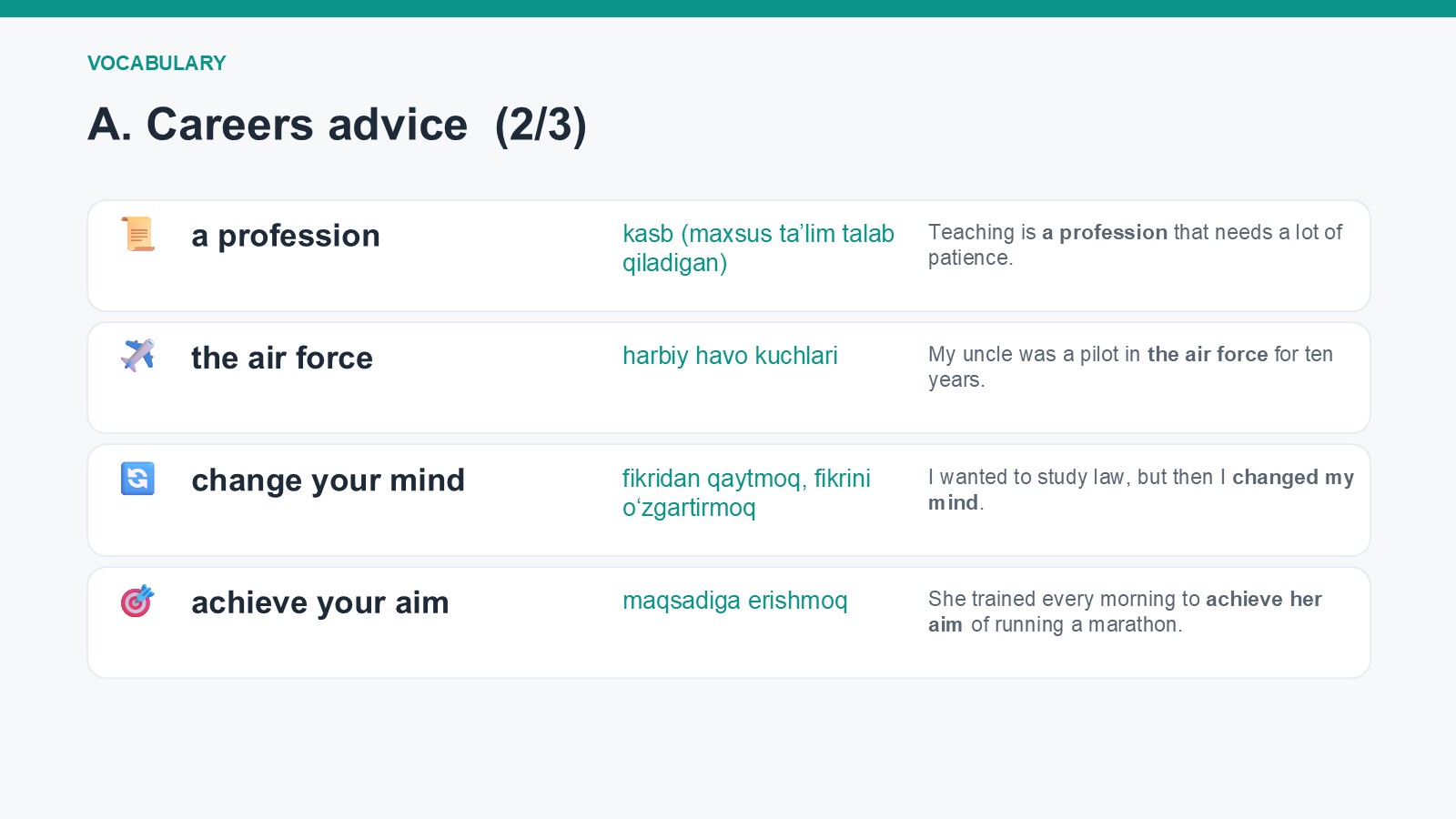
Craig: A boy once told me he wanted to be an astronaut. He was serious, so I didn’t laugh. I told him to think about joining the air force. I didn’t want him to change his mind, and I’m not even sure that every astronaut starts there. But I thought it was probably his best chance of getting closer to his dream.
Interviewer: So what’s your advice to young people?
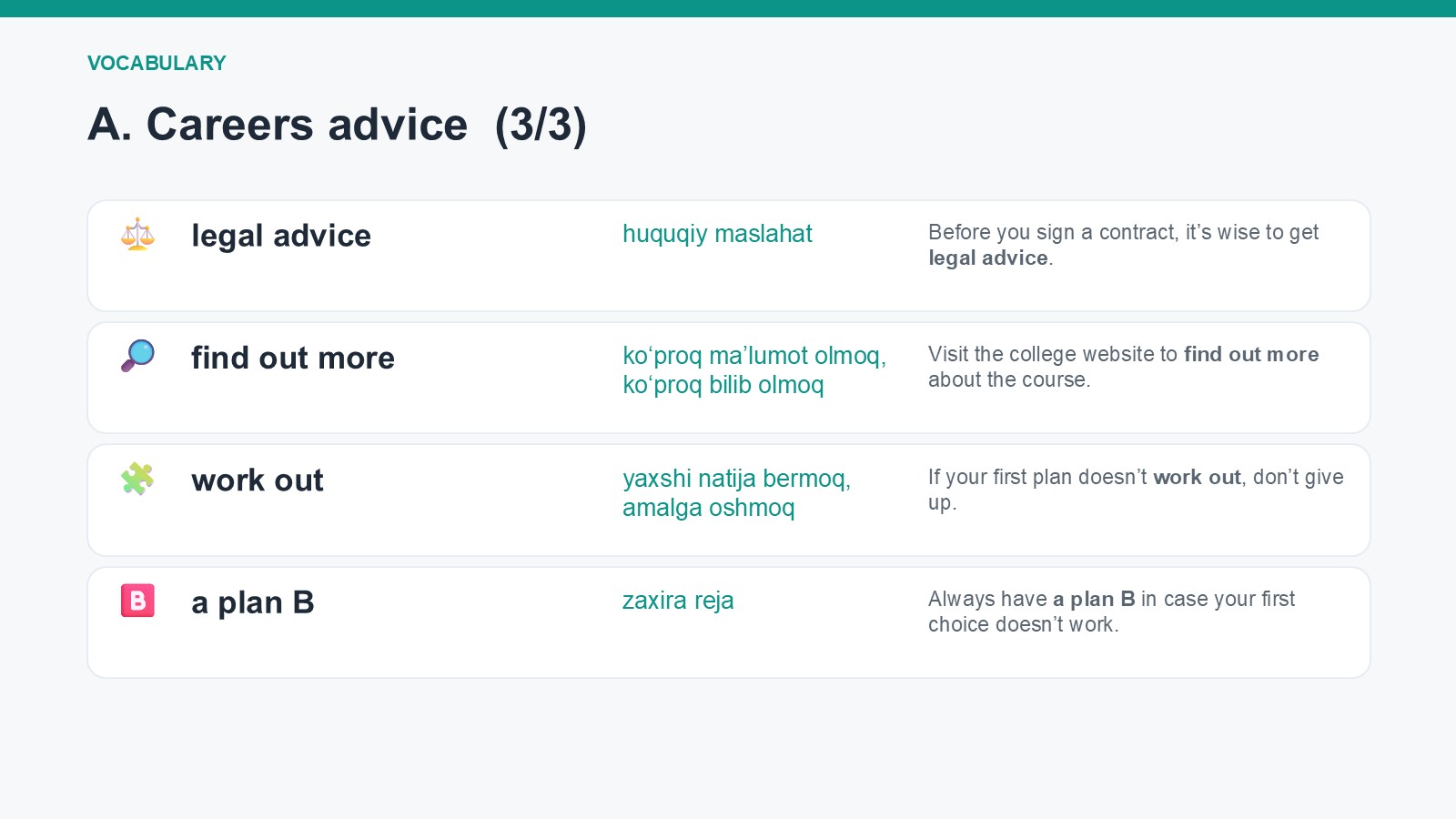
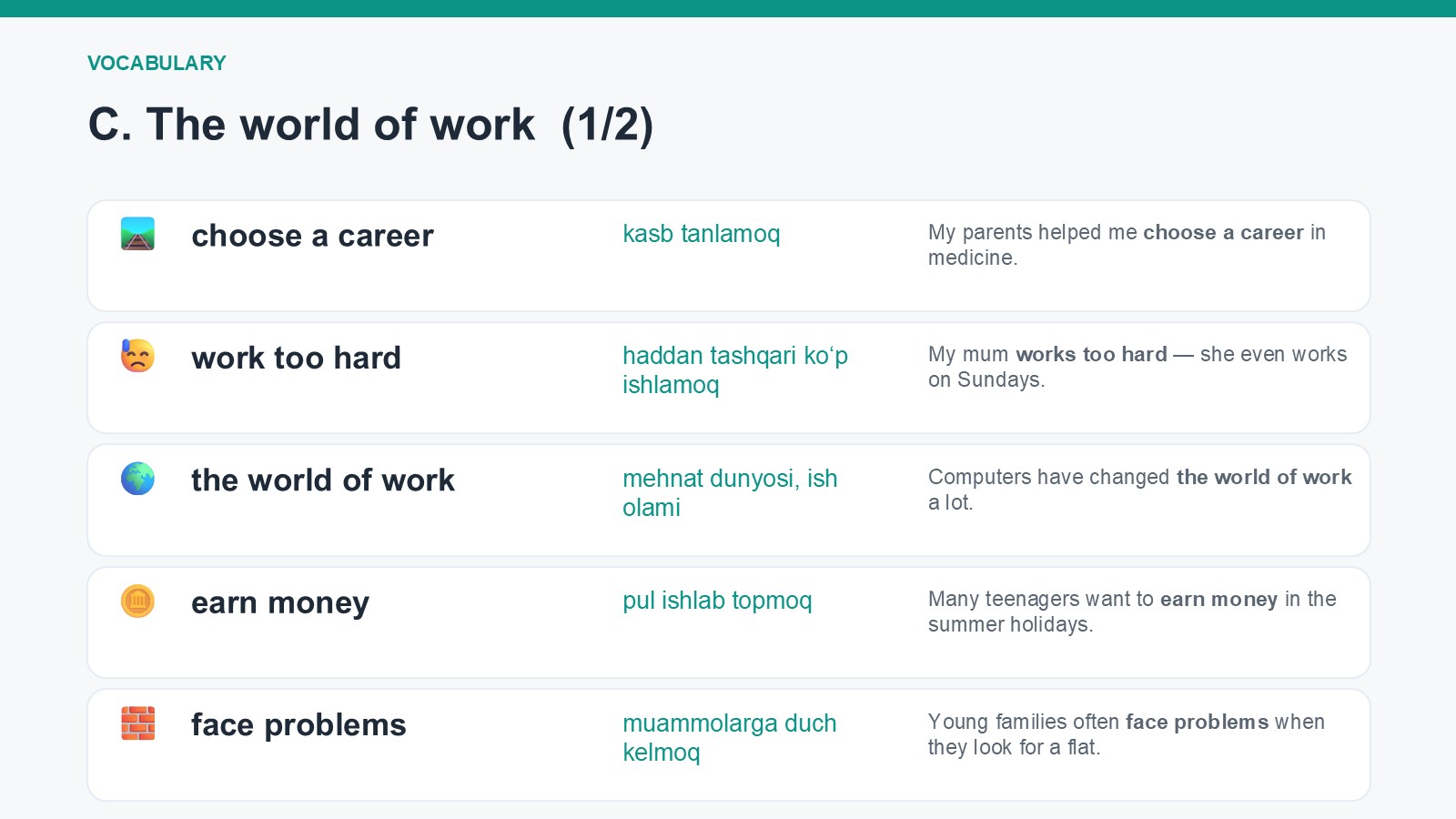
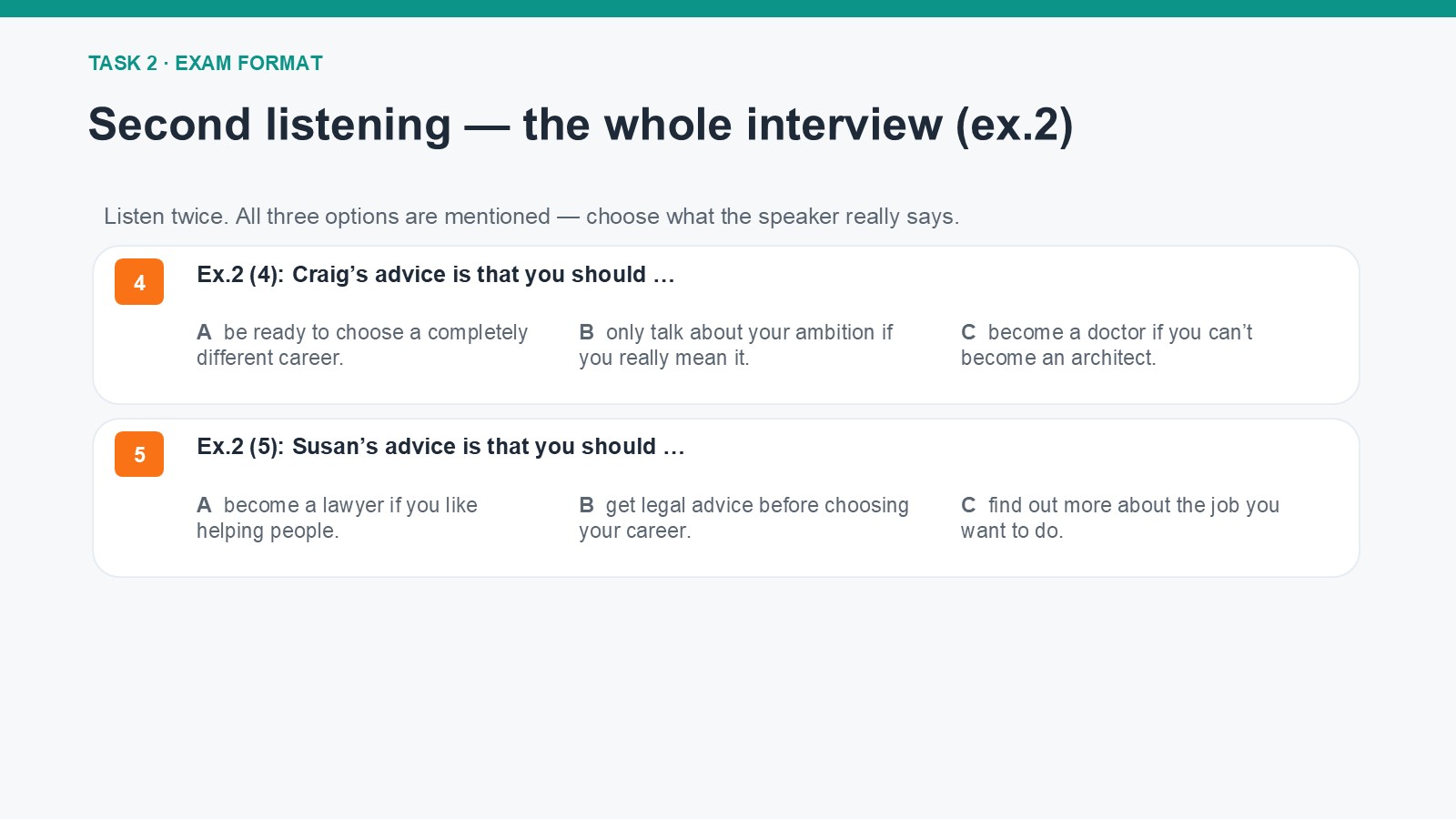
Craig: Some people say you should only talk about your ambition if you really mean it. I don’t agree — talk about it as much as you like! But have a plan B. Be ready to choose a completely different career if your first choice doesn’t work out.
Susan: I agree. Lots of pupils tell me they want to be lawyers because they like helping people. That’s great, but do they know what a lawyer actually does all day? You don’t need legal advice to choose a career — you need information. So my advice is simple: find out as much as you can about the job you want to do before you decide.
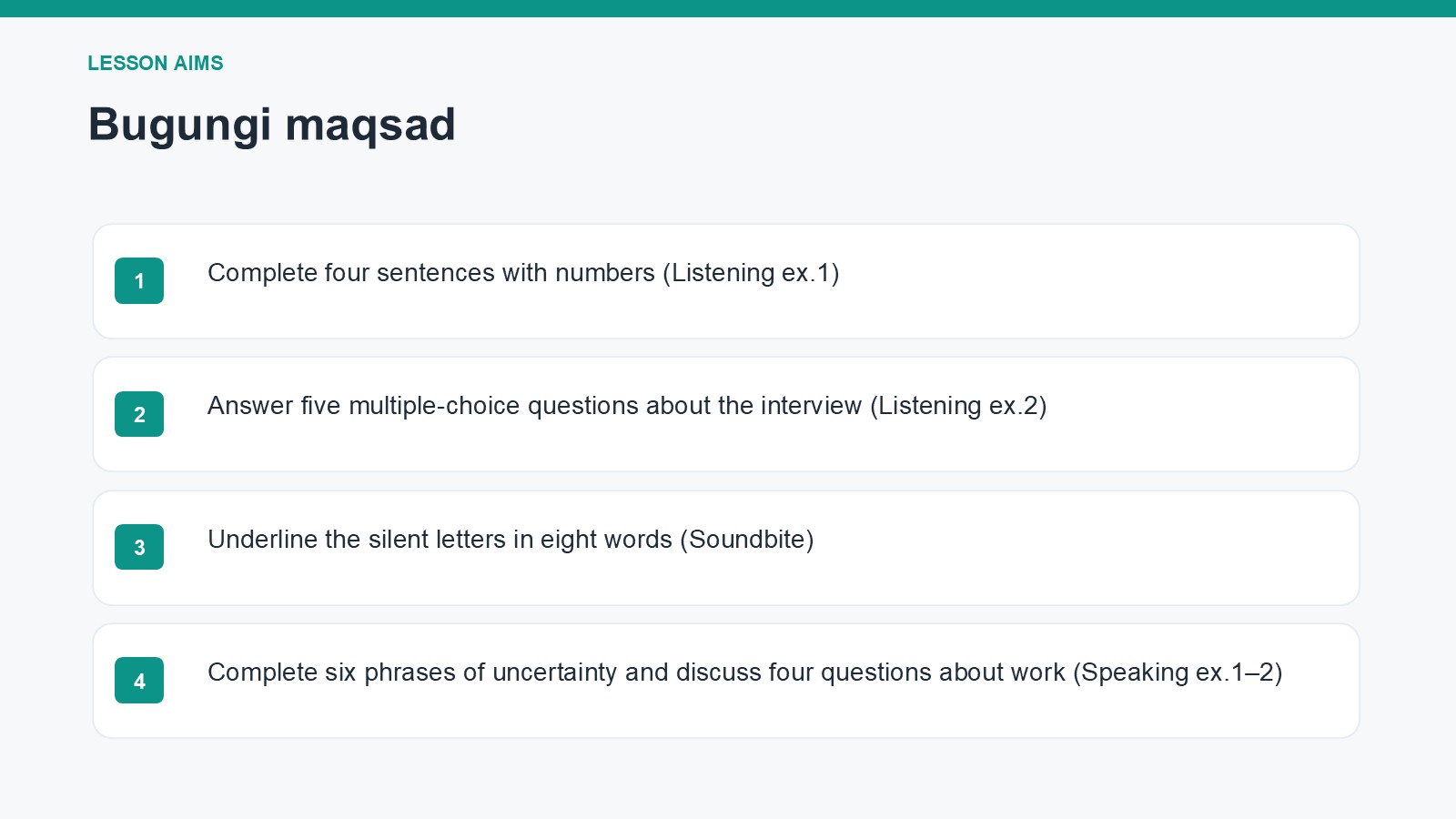
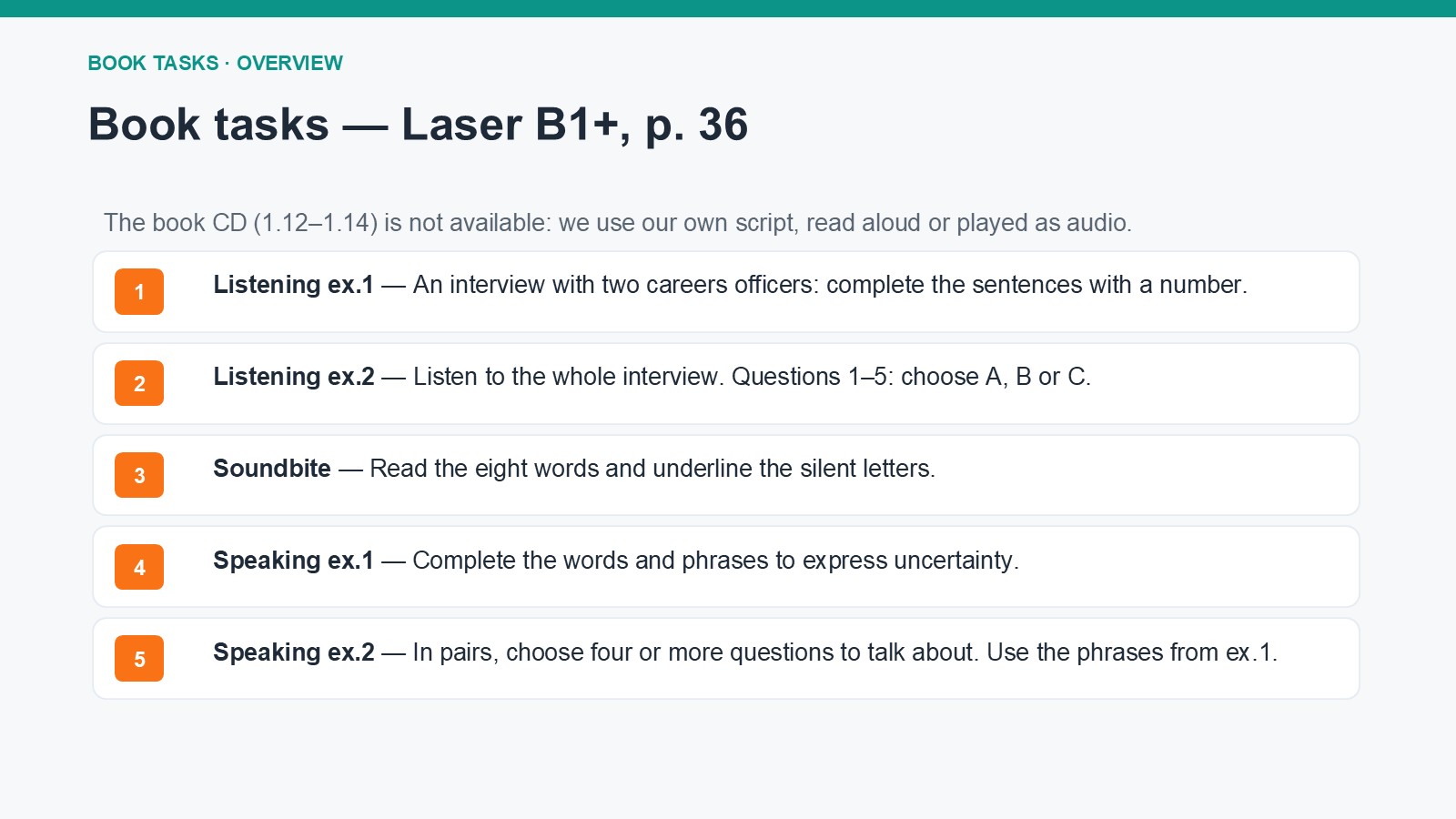
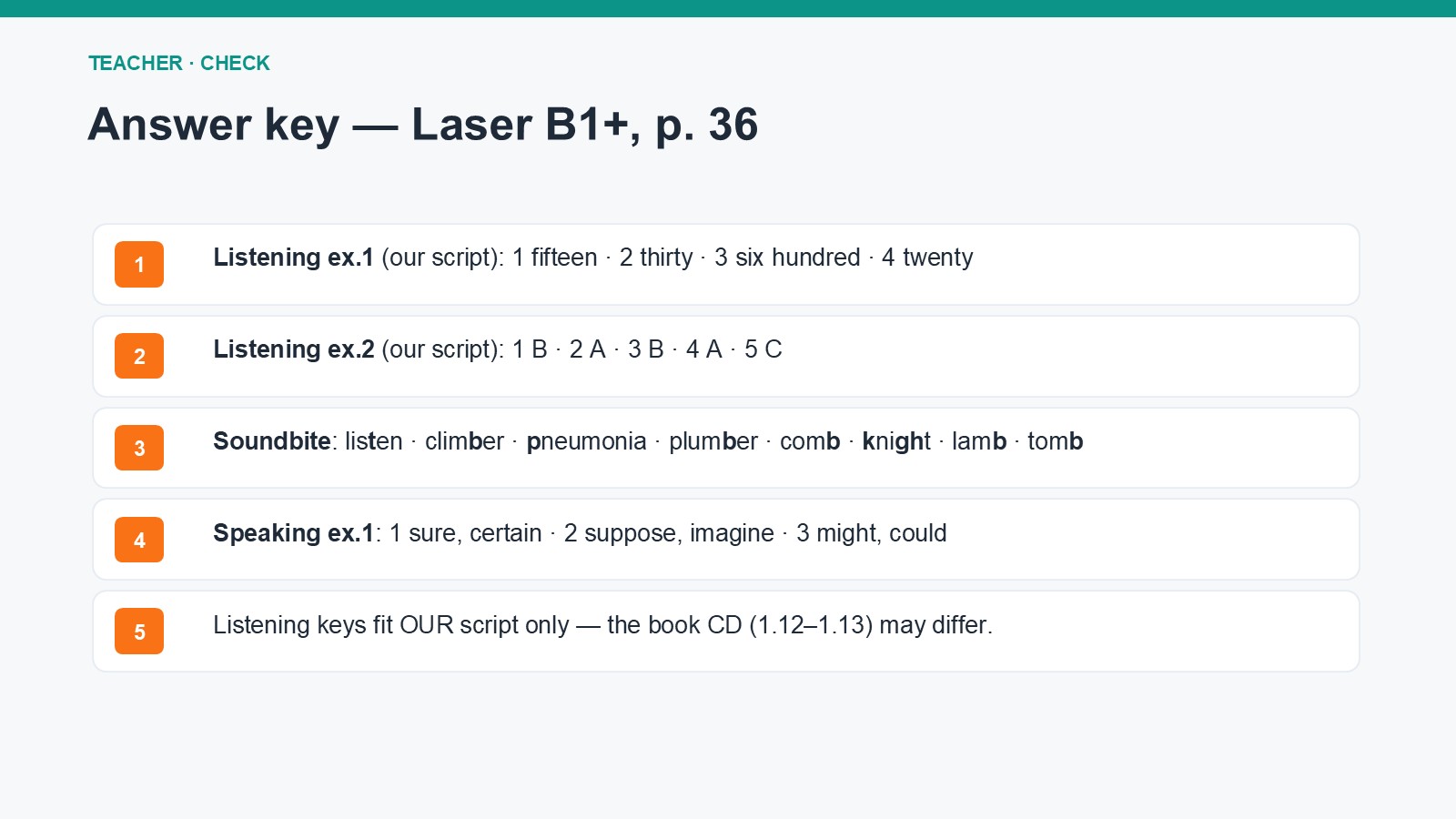
Savollar: 1. Listening ex.1: complete sentences 1–4 with a number. · 2. Listening ex.2: questions 1–5 (A, B or C). · 3. Which number in the script is about group sessions, not interviews? · 4. Does Craig agree that you should only talk about your ambition if you really mean it?